


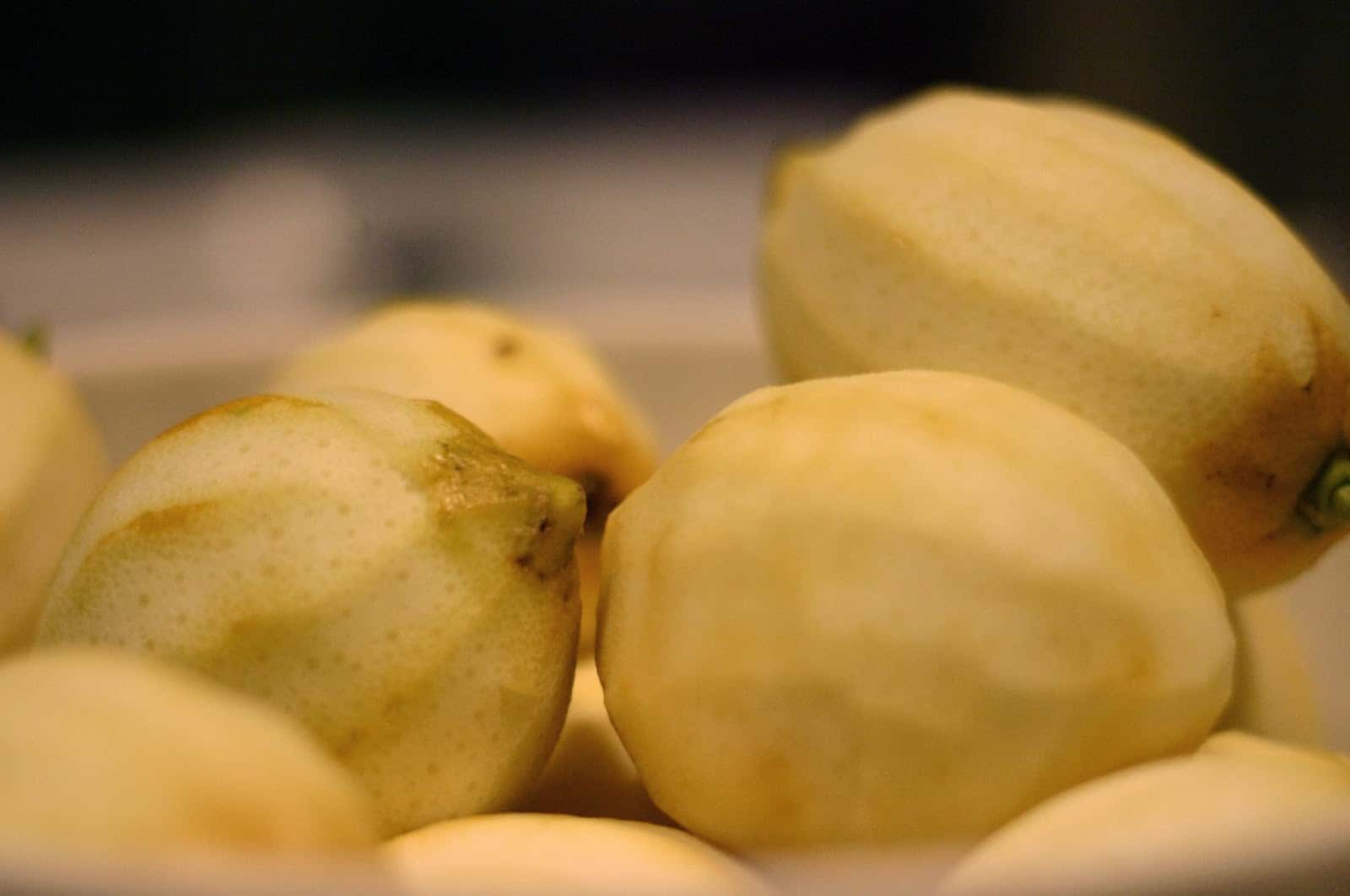
Lemon marmalade looks almost too simple on paper: fruit, sugar and a saucepan. In practice, a few extra millimetres of peel or ten unnecessary minutes on the heat can change it completely. That is also what makes it interesting. A good lemon marmalade should smell unmistakably of lemon, keep a slight bitter edge and still taste fresh rather than like citrus-flavoured candy.

Starting with fragrant fruit makes the job much easier. Around Syracuse, the Femminello lemon produces more than one flowering during the year: Primofiore, Bianchetto and Verdello arrive at different times and do not behave exactly the same in the kitchen. Peel thickness, juice and aroma change, so a batch made in January may need a slightly different hand from one made in summer.
Which lemons are best for marmalade?
If you plan to use the peel, check the product information first. The peel must be suitable for eating, and the fruit should still be washed carefully. “Organic”, “untreated” and “edible peel” are not labels we treat as automatically interchangeable; the information can vary from one product and crop to another.
For an aromatic marmalade, choose lemons with a lively peel and plenty of juice. Sicilian Verdello is a good example. It can remain green even when fully mature, something that still surprises people who associate green citrus with unripe fruit. You can check the lemons currently available in our shop, because the variety changes with the season.
The Verdello story: a summer lemon shaped by Sicilian know-how
Verdello has an old connection with a cultivation practice known as forzatura. Traditionally, irrigation was reduced during summer and then resumed generously to encourage the lemon tree to flower again. Modern orchard management is more carefully calibrated, but the story shows how responsive lemon trees are to water and weather.
That agricultural detail matters in a kitchen too. A summer peel can be intensely aromatic, while a winter Primofiore may give a different ratio of juice to rind. Instead of fixing every variation with more sugar, it is usually better to adjust soaking time and the amount of peel you keep.
With peel or without?
Marmalade made with peel has more character. The coloured zest brings essential oils and perfume; the white pith contributes pectin and body, but also bitterness. Remove every trace and the flavour becomes cleaner but less complex. Leave too much thick pith and it can dominate the jar.
For a first batch, a sensible compromise is to use almost all the flesh and only part of the peel, sliced very thinly. After making it once or twice, you quickly learn the level of bitterness you enjoy. This is one of those recipes learnt more effectively with a teaspoon than a stopwatch.
A reliable base recipe
For about 1 kg of lemons, start with 650-800 g of sugar. The range is deliberately wide because lemons differ in acidity and because people want different levels of bitterness. Wash the fruit, remove the seeds and slice it finely. If you prefer a gentler marmalade, reserve some of the peel rather than using all of it.
Cover the slices with water and leave them to soak. Several hours, with one or more changes of water, will soften the bitter edge without erasing it. Drain, transfer to a pan with a little fresh water and cook until peel and pith begin to soften. Add the sugar only then, and continue over moderate heat, stirring more frequently as the mixture thickens.
How do you know when it is ready?
The cold-plate test is more useful than a fixed cooking time. Put a small spoonful on a chilled plate, wait a few seconds and tilt it. If it moves slowly and wrinkles slightly when pushed with a finger, you are close. Remember that marmalade thickens further as it cools; cooking until it already looks firm in the saucepan is a common way to overdo it.
Reducing bitterness without losing the lemon
Bitterness is not a flaw to eliminate completely; it is something to control. You can adjust three things: how thinly you slice the peel, how long you soak it and how much white pith you retain. These choices work better than throwing in extra sugar at the end, which can hide the lemon without truly correcting an overly dominant peel.
Taste a small piece after soaking. It sounds almost too obvious, but that quick test prevents many last-minute corrections. When the season changes, making one trial jar before a large batch is equally useful.
Storage is the part that should not be improvised
Shelf-stable home preserves require suitable jars, careful hygiene and a reliable heat-processing procedure. Simply turning a hot jar upside down is not, by itself, a guarantee of safe preservation. If you are not experienced with preserves, make smaller quantities, refrigerate them and use them promptly.
Once opened, keep the jar refrigerated and always use a clean spoon. If you notice mould, unusual odours, leaking or a swollen lid, do not taste it. The romantic part of marmalade is the scent filling the kitchen; food preservation deserves a much more practical attitude.
One final thought: let the lemon remain the main ingredient
The best marmalade is not necessarily the sweetest or the stiffest. It is the one that still smells of the fruit when you open the lid. Sicilia Agrumi follows the natural citrus calendar, so the lemon available today may not be the one available several months from now. In marmalade, that seasonal difference is something to enjoy rather than correct.


