


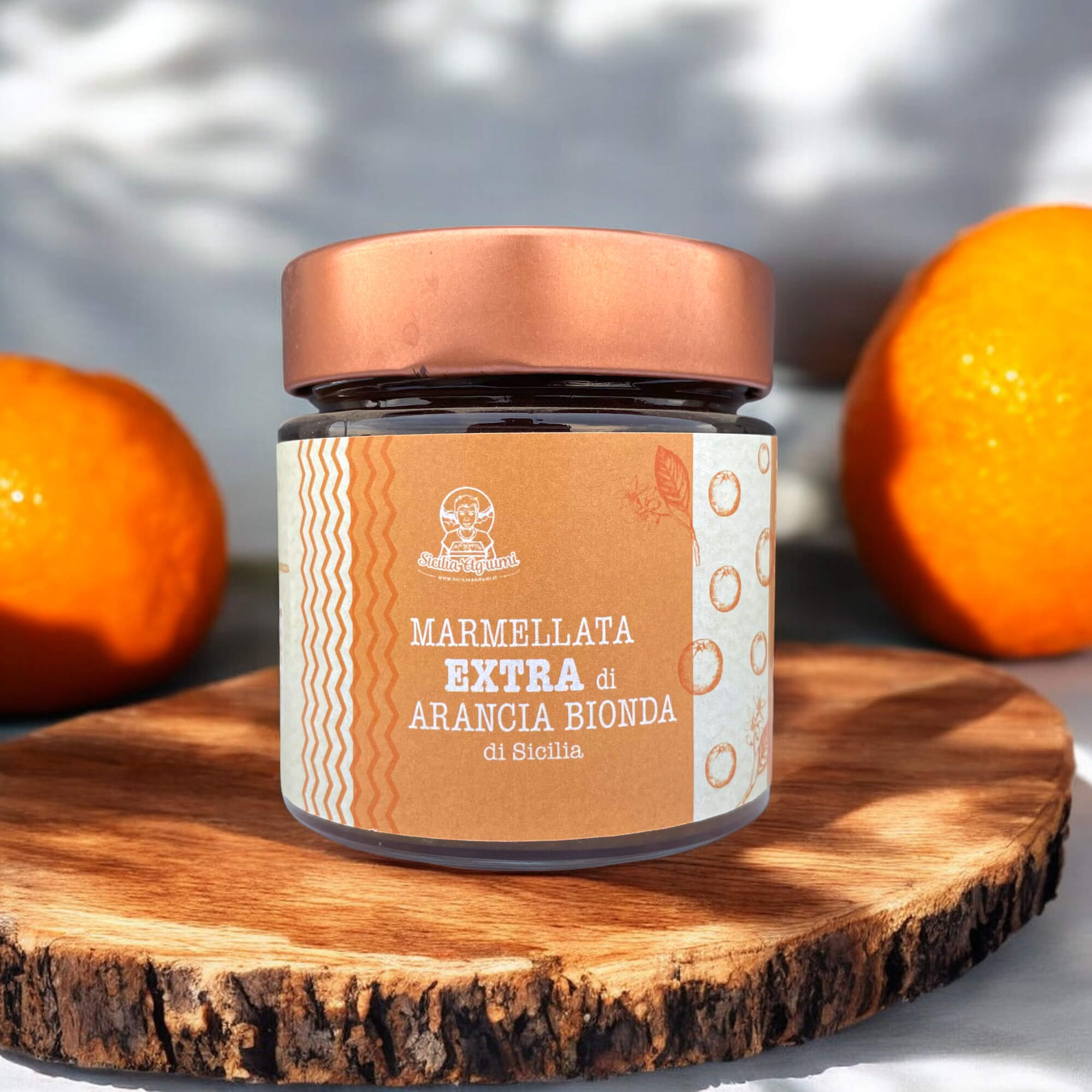
Saying “orange marmalade” is a little like saying “red wine”: it names a family, not a single flavour. Bitter oranges produce something assertive and grown-up; Navel oranges are softer and sweeter; Tarocco and Moro bring aromas and colours that shift as winter progresses.

So the useful question is not only “what is the recipe?” but which orange do I want to preserve in the jar? At Sicilia Agrumi the answer changes during the year. Navel opens the season, blood oranges arrive in winter, and Ovale and Valencia extend it into the warmer months.
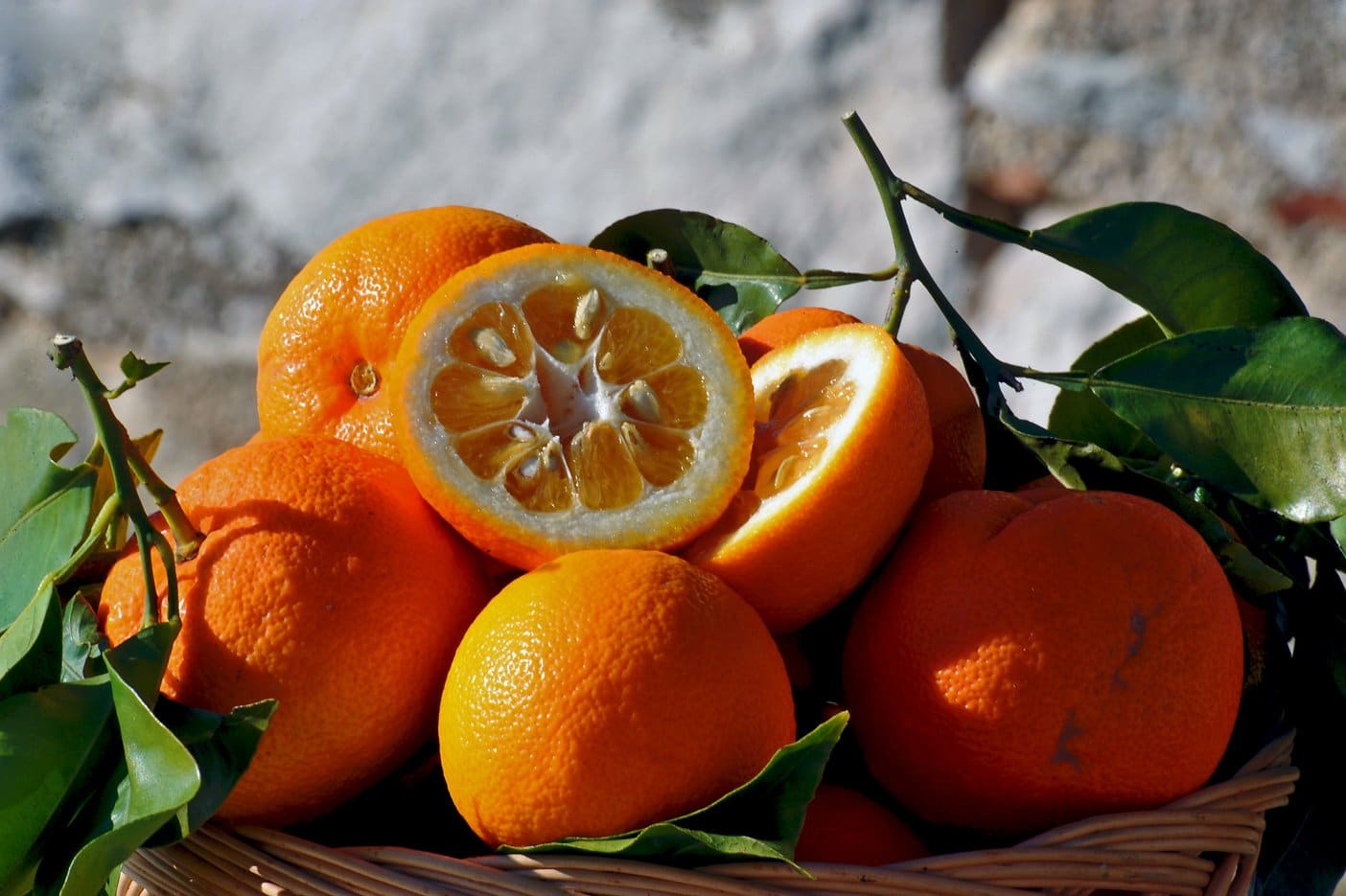
Bitter oranges: the classic choice for a serious marmalade
Bitter oranges are not the fruit most people choose for eating in segments, yet they become remarkably useful when cooked with sugar. Their peel is intensely fragrant and their bitterness creates the contrast that defines traditional marmalade. This is why they have such a long history in preserves.
There is an agricultural curiosity behind them too. Bitter orange has long been used as a rootstock for other citrus because of the robustness of the tree. Its Mediterranean story goes back centuries; in the kitchen, however, the reason to use it is immediate: it keeps its personality even after a long cook.

Tarocco, Moro and Navel make three very different jars
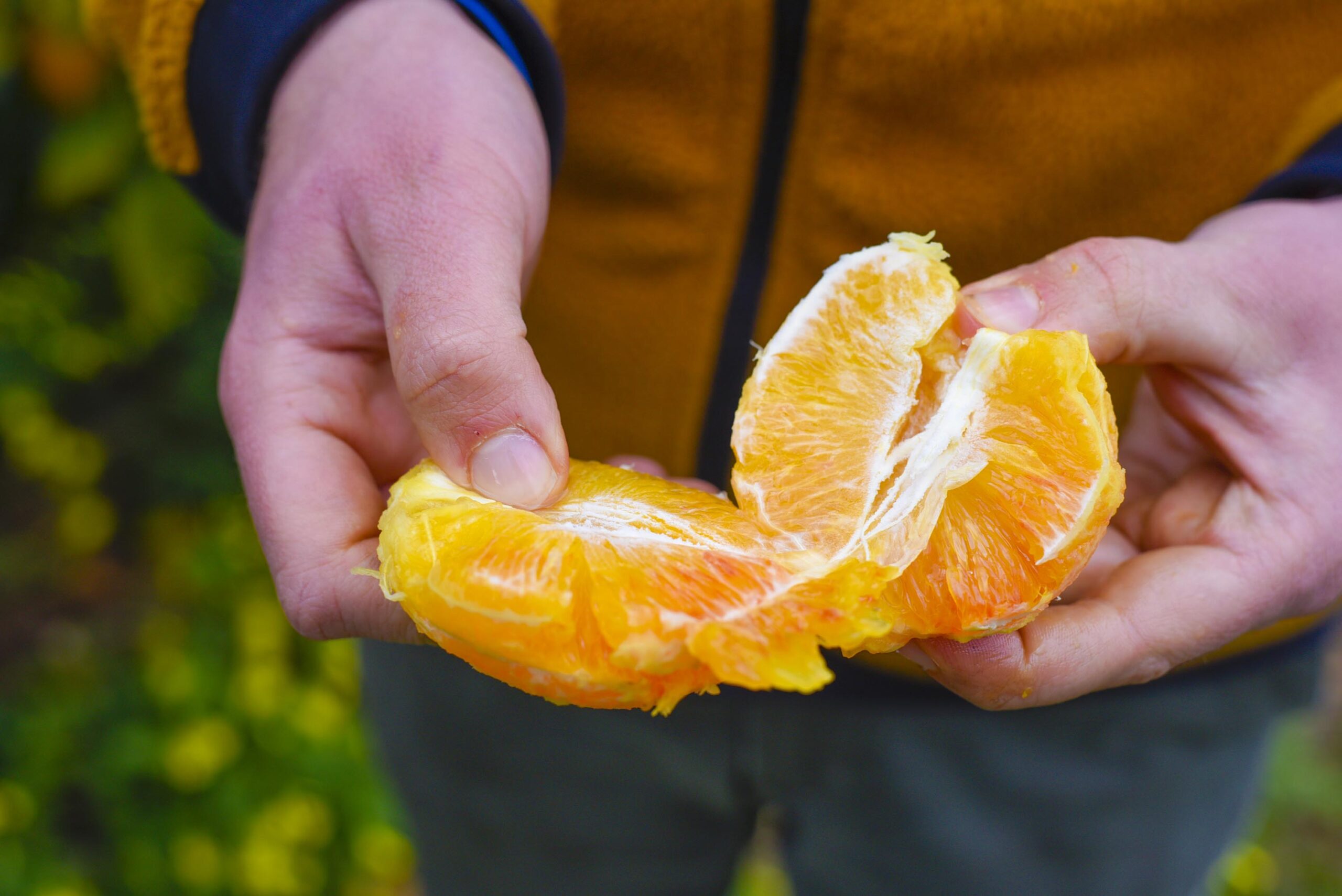
Tarocco is balanced and aromatic, with pigmentation that can range from subtle streaks to deeper red. Moro is more intense and, in cold periods, may develop wine-red flesh. Navel is sweet, easy to peel and normally seedless. None is universally “best”; they simply point the marmalade in different directions.

The Navel name comes from the small secondary fruit that develops inside the main orange, creating the characteristic navel-like end. It is not a defect. In marmalade, Navel’s natural sweetness is approachable, especially if you keep enough peel to give the jar some tension.
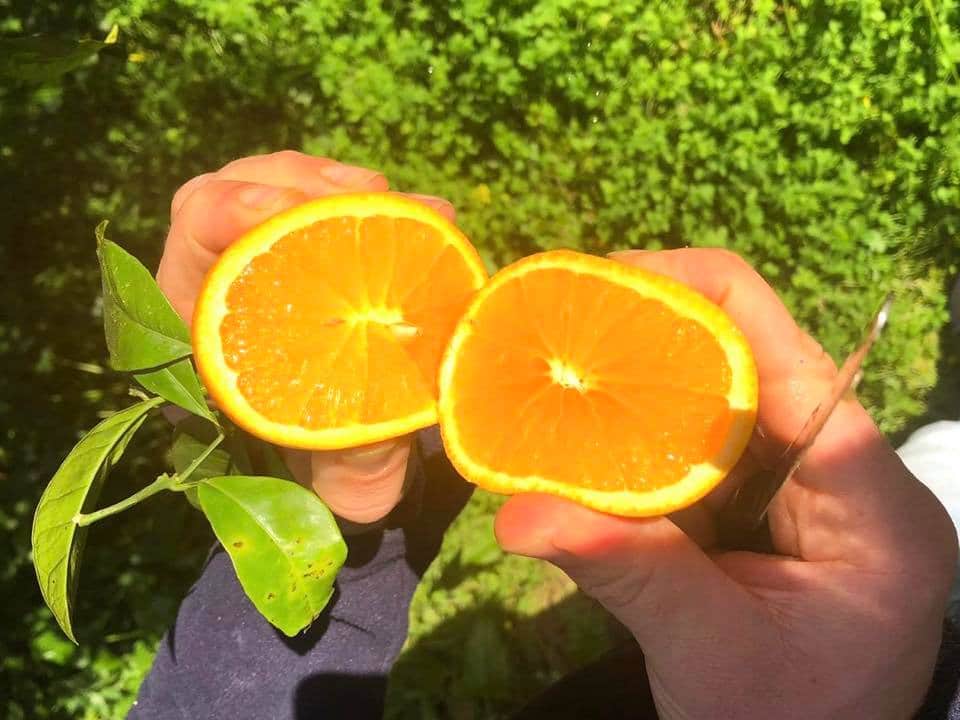
Late oranges: Ovale and Valencia
Later in the season, Ovale and Valencia become interesting. Ovale oranges are associated with the Pantalica area and are remembered for good keeping quality. A local story tells of fruit once being stored in cool, sheltered places, including caves, so that oranges could last well into the warmer months. Whether memory or legend, it explains why late fruit mattered before modern refrigeration.
Valencia is juicy and fresh, usually with a pleasant acidic edge. That makes it very good for a spring marmalade that does not taste simply sweet. If you have two varieties available, blending them can be more interesting than forcing one rigid recipe onto every crop.
A practical base recipe
For 1 kg of prepared oranges, start with 600-750 g of sugar. With bitter oranges, peel treatment and soaking are more important; with sweet oranges the process can be simpler. Wash the fruit, reserve the amount of peel you want to keep, slice it finely and remove seeds and damaged pieces.
Peel can be briefly blanched or soaked if you want to soften its bitterness. Cook flesh and peel until tender, add sugar and continue over moderate heat. Stir more often towards the end, when pectin and sugar are concentrating the mixture and a few minutes can make a noticeable difference.
Do not automatically throw away all the white pith
Pith contains pectin and helps the preserve set. Removing all of it gives a gentler flavour, but may also mean a longer cook to achieve body. Keeping a controlled amount, particularly with finely cut peel, often gives a better balance. It is one of the details that three-line recipes rarely explain.
The cold-plate test and the problem with endless cooking
Place a teaspoon on a cold plate. If it runs like syrup, it needs longer; if the surface forms a slight wrinkle when pushed, it is close. Do not wait until the marmalade looks as firm in the pan as you want it in the jar. Cooling will finish the job.
Overcooking drives off fresh citrus aromas and pushes the flavour towards caramel. That can be pleasant if intentional, but it should not happen by accident. With freshly harvested oranges, the pleasure is keeping some of the fragrance of the peel and brightness of the juice.
Taste the difference between varieties
Sicilia Agrumi’s sweet pantry includes preserves made with Sicilian citrus, from blond and bitter oranges to red varieties. Browse the shop when they are available: tasting two side by side is the quickest lesson in why the word “orange” never tells the whole story.


