


When a box of fresh lemons arrives, the first mistake is leaving it closed in a corner for several days. Citrus fruit continues to respire and trapped moisture creates the conditions for problems. Good storage therefore starts before the refrigerator: opening, checking and spreading the fruit out matters more than most online “tricks”.

Open the box and inspect it immediately
Remove closed packing materials, check for crushed fruit or small cuts and separate any damaged lemons so they can be used first. There is no need to wash the entire box as soon as it arrives. Adding water to the surface before storage can increase moisture; wash fruit thoroughly when you are ready to use it.

Room temperature or refrigerator?
If you will use the lemons within a few days, keep a small quantity in a cool, ventilated place away from sun and heat. For longer storage the refrigerator slows water loss and ageing. Avoid airtight plastic bags full of condensation: the fruit benefits from air circulation.
Do not store the whole box in exactly the same way
A practical approach is to leave a few kilos out for immediate use and keep the rest cooler, checking them periodically. It is the same principle Sicilia Agrumi recommends for other naturally handled citrus: a small problem on one fruit should not have enough time to affect the fruit around it.
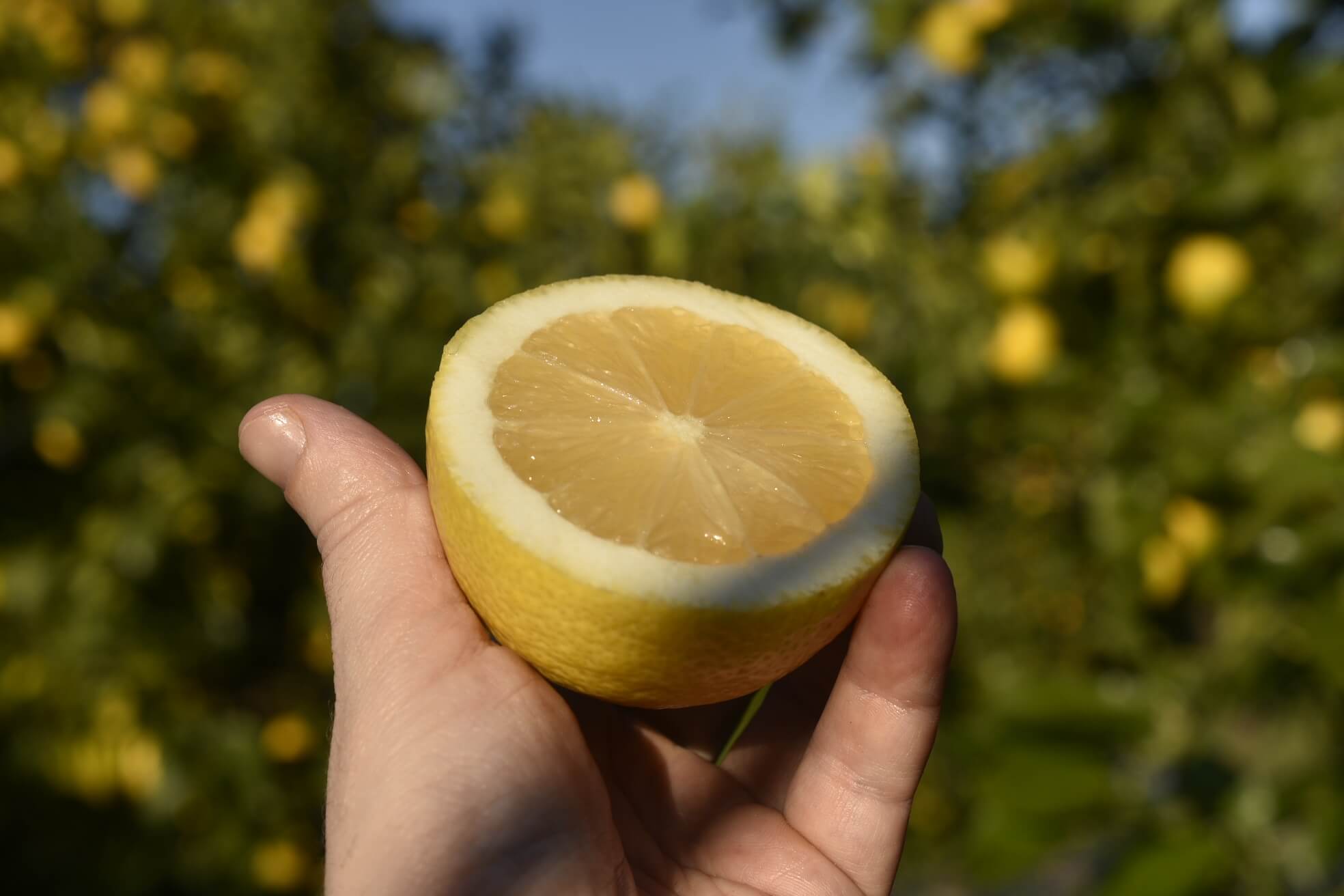
Cut lemons
A lemon that has already been cut belongs in the refrigerator, with the cut face protected inside a closed container. Use it within a few days. If you have squeezed more juice than you need, do not leave it sitting in an open glass; transfer it to a small clean container.
Can you freeze lemon juice and zest?
Yes. Freeze juice in ice-cube trays and then move the cubes to a freezer bag for cooking and drinks. Finely grated zest freezes well too, provided the lemons have edible peel. Whole lemons can also be frozen, but their texture changes after thawing, making them better for juice and cooking than for neat slices.
Variety and season make a difference
The Femminello Siracusano lemon changes through the year: Primofiore, Bianchetto and Verdello come in different periods and differ slightly in peel and fruit characteristics. Rainfall and ripeness at harvest also affect keeping quality, which is why one guaranteed lifespan for every lemon would be unrealistic.
What to avoid
Heat, standing water, fruit piled in closed containers and long periods without checking are the worst combinations. Lemons do not require complicated home-storage rituals. They mainly need cool temperatures, dryness, ventilation and a brief look every few days.


