


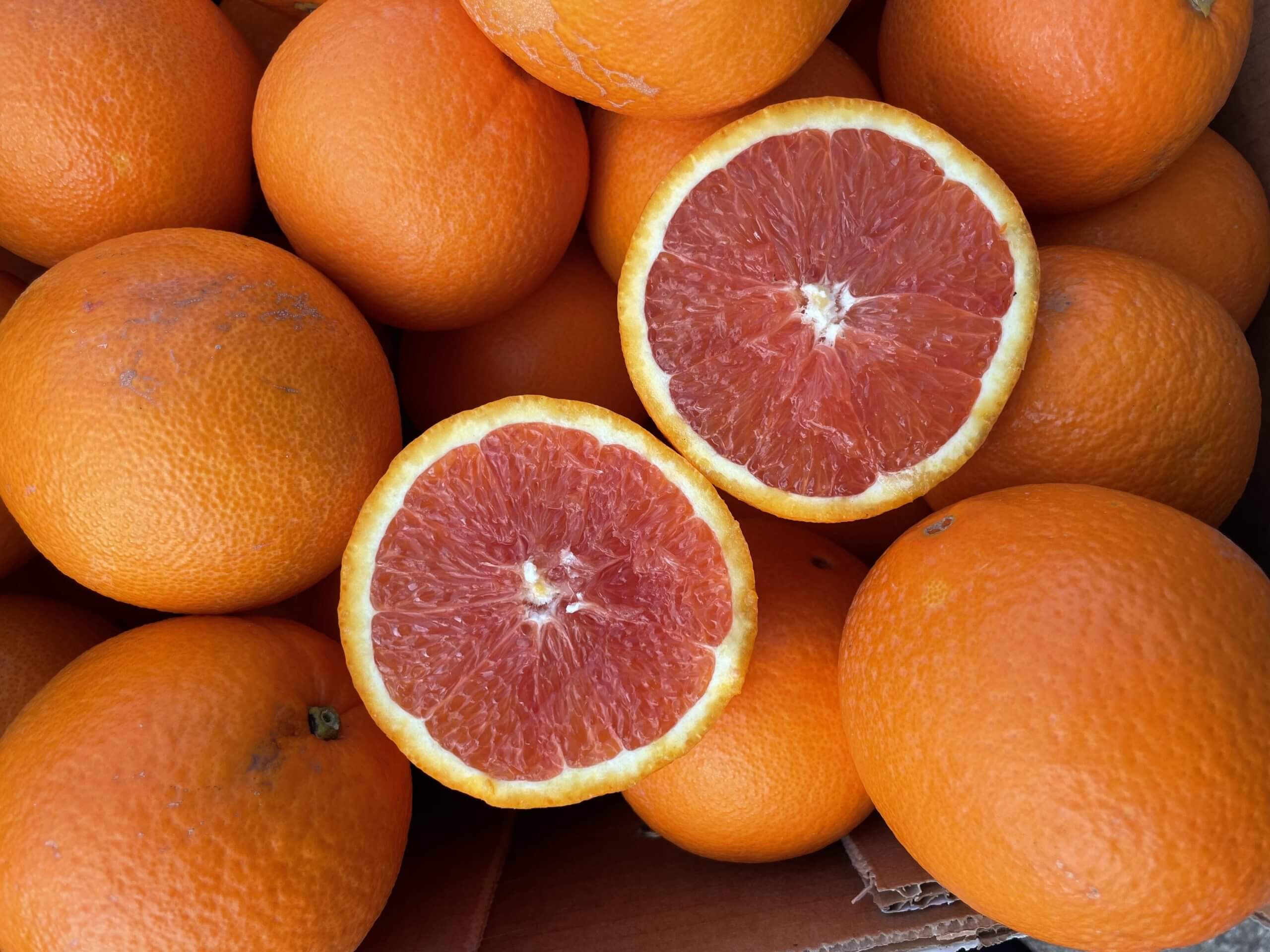
On the outside it looks like a normal navel: orange skin, regular shape and the characteristic “navel”. The first cut, however, shows a salmon pink pulp that surprises those expecting the dark red of a Moro. The Cara Cara is a variety of Navel orange, generally seedless, sweet and not very acidic. It is not a cross with grapefruit and does not belong to the group of Sicilian blood oranges pigmented by anthocyanins. It has its own personality, delicate but recognisable.
Where does the name Cara Cara come from?
The variety was identified in Venezuela, in the Hacienda Cara Cara, as a spontaneous mutation of a Washington Navel. Hence the name, which does not describe the color and should not be translated. Its diffusion in various countries has shown that the fruit adapts well to the citrus growing areas suitable for Navels. In Sicily the climate, the light and the management of the harvest allow us to obtain sweet, fragrant fruits intended above all for fresh consumption.
Why is the pulp pink?
The color of Cara Cara is mainly linked to carotenoids, including lycopene, and not to the same mechanism that colors Tarocco, Moro and Sanguinello. For this reason the shade tends towards pink, salmon or pale red, not wine. The intensity can vary from one fruit to another and over the course of the season. A less bright color does not automatically mean lower quality: maturation, position on the plant and climatic conditions make each harvest slightly different.
Are Cara Cara and pink grapefruit close relatives?
Both may have pink flesh, but the palate experience is very different. Grapefruit brings a characteristic bitter note and greater acidity; Cara Cara remains a sweet orange, easy to eat in segments. Some recognize nuances reminiscent of berries or grapefruit, but they are aromatic descriptions, not evidence of a cross. The outer peel of the Cara Cara is also that of a Navel orange.
What do Cara Cara oranges taste like?
The taste is sweet, smooth and less acidic than many blood oranges. The pulp is juicy and the scent is not aggressive. These are characteristics appreciated by those who eat orange for breakfast or as a snack and by those who find a more acidic citrus fruit too pungent. Sweetness should not be confused with a floury consistency: a fresh fruit must be turgid, with segments full of juice and non-dry membranes.
Differences between Cara Cara, Tarocco and Moro
- Cara Cara: Navel with pink pulp, normally seedless, sweet and slightly acidic.
- Tarocco: balanced blood orange, with variable pigmentation and complex aroma.
- Moro: darker pulp in suitable periods, intense flavor and stronger note.
There is no overall winner. The Cara Cara is immediate and pleasant at the table; the Tarot is versatile; il Moro is chosen by those who love character and colour. A side-by-side tasting, made with fruits at the same temperature, explains the differences better than any classification.
When they are collected and how they are recognized
Sicilian availability is concentrated in winter and can change based on the vintage. The peel must be intact, but small superficial marks are normal on a fruit not built to look identical to others. The weight in relation to the size helps to understand the presence of juice. Don’t expect a pink peel: the particular color can only be seen by opening the orange.
How to use them in the kitchen
The pink pulp enhances fruit salads, yogurt, tarts and salads. Peeled raw, it goes well with fennel, rocket, olives or delicate fish. The juice produces pink, sweet and slightly bitter drinks. If the peel is declared edible, you can grate it into a paste or marinade. To preserve the color, add the fruit at the end of preparation and avoid long cooking.
Where to buy Sicilian Cara Cara
The variety is not available all year round: it is better to follow the real calendar instead of looking for it out of season. In the shop you will find BIO Rosa Cara Cara Navel oranges in boxes of different weights. Choose a format consistent with consumption and store the fruits in a cool, ventilated place. The best way to understand them remains simple: cut one, observe the pink pulp and taste it without adding anything.
Frequently asked questions before we start
Can I prepare or organize everything in advance?
It depends on the preparation, but one rule is always useful: keep the most delicate parts separately and combine them as late as possible. Juice and zest lose their scent over time, while humidity and temperature changes change consistency. If working ahead, use clean containers, date and maintain the cold chain when the recipe calls for it. A fresh result often comes from good organization, not from a last ingredient added to correct.
How do I choose suitable oranges?
Look for fruit that is heavy for its size, intact and consistent with use: small caliber for lots of juice, medium or large for segments and presentation. If the recipe uses zest, check that the peel is declared edible. The variety matters, but its harvest time also matters. Tasting the fruit before measuring out sugar, vinegar or spices avoids most errors and makes each preparation suitable for the box that actually arrived.
From the recipe to your order: choose Sicilia Agrumi
Would you like to start with fresh Sicilian citrus fruit suited to this recipe? Discover and buy the recommended product from the Sicilia Agrumi shop. Choose the box size according to the number of people you are serving: the fruit comes directly from the grower, and anything left can be enjoyed fresh or used in another recipe.


