


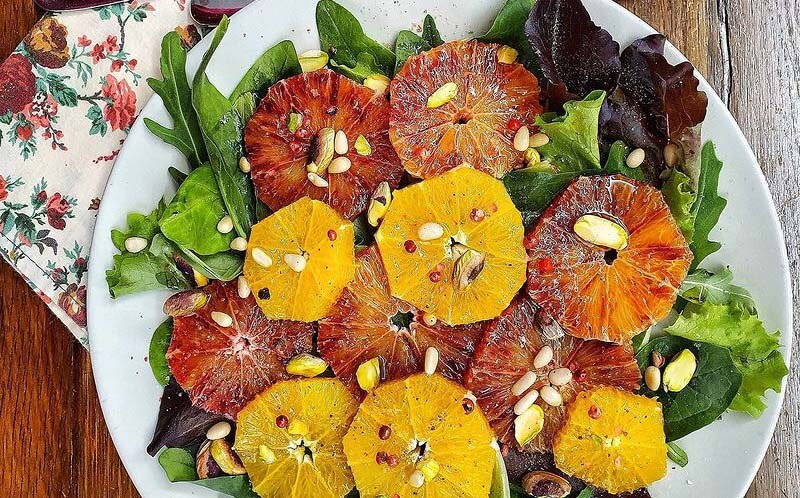
A well-made orange vinaigrette shouldn’t taste like juice spilled on salad. A balance is needed between the watery part, fat, acidity, salt and a small aromatic component. The juice brings sweetness and aroma, but contains less acidity than vinegar: for this reason it is best to combine it with lemon or wine vinegar. The result is a fresh condiment that combines fennel, radicchio, fish, chicken and roasted vegetables without covering them.
The starting proportion
For four portions use 60 ml of filtered orange juice, 20 ml of white wine vinegar or lemon juice, 80 ml of extra virgin olive oil, half a teaspoon of salt and pepper. It is a lighter base than the classic ratio of three parts oil and one part vinegar, because the juice adds volume and sweetness. Always taste: a Tarocco and a Navel do not have the same ratio between sugars and acidity.
Optional ingredients, one at a time
- A teaspoon of mustard to stabilize and give character.
- Half a teaspoon of honey if the orange is very acidic.
- Very fine zest from fruits with edible peel.
- Herbs such as thyme, mint or parsley.
- A pinch of chilli for vegetables and white meats.
Don’t put everything together. The vinaigrette works when few elements are recognized. Mustard, honey, garlic, herbs and spices in the same bowl transform the orange into an indistinct background.
How to create an emulsion that does not separate immediately
Dissolve salt and mustard in the juice with the vinegar. Pour the oil slowly while working with a whisk. Alternatively, put everything in a jar, close and shake vigorously. The mustard helps the emulsion, but separation after a few minutes is normal: there are no thickeners. Just shake again before seasoning. Add the zest only at the end to better preserve the aroma.
Orange and mustard vinaigrette
It is the most versatile version for radicchio, endive, cabbage and chicken. Use Dijon mustard, not too sweet, and reduce the vinegar if it is very pungent. The bitter component of the leaves meets the sweetness of the juice, while the mustard keeps the seasoning anchored to the ingredients. A spoonful of toasted walnuts or almonds completes the salad without the need for heavy sauces.
Version for fish and shellfish
Prefer lemon juice to vinegar, delicate oil, a little white pepper and thyme. Use the vinaigrette on cooked shrimp, salmon, amberjack or an octopus salad. Don’t leave the raw fish in the sauce for a long time: the acidity changes its surface and the recipe becomes a marinade. Season just before serving and always maintain proper handling of the fish.
Hot version for roasted vegetables
Recover the bottom of the pan with carrots, pumpkin or fennel and dissolve it with orange juice. Transfer to a bowl, add vinegar and incorporate the oil. The heat releases aroma but the juice must not boil for a long time, otherwise it loses freshness. This warm sauce also goes well with legumes and cereals, especially if completed with parsley and toasted seeds.
Errors that make the seasoning too sweet
The first is to use already sweetened packaged juice. The second is to add honey before tasting. The third is to reduce the juice on the heat until the sugars are concentrated. For a vinaigrette you need fresh orange, a touch of acid and sufficient salt. If the taste remains flat, add a few drops of vinegar, not more oil.
Storage and selection of oranges
The vinaigrette can be stored in the refrigerator for two or three days in a clean jar. Shake it and bring it back to almost room temperature before using it, because cold oil thickens. For a lively color try the Organic Tarocco PGI oranges; for a sweeter dressing choose Navel. If you use the zest, check the edibility and grate only the colored part.
Frequently asked questions before we start
Can I prepare or organize everything in advance?
It depends on the preparation, but one rule is always useful: keep the most delicate parts separately and combine them as late as possible. Juice and zest lose their scent over time, while humidity and temperature changes change consistency. If working ahead, use clean containers, date and maintain the cold chain when the recipe calls for it. A fresh result often comes from good organization, not from a last ingredient added to correct.
How do I choose suitable oranges?
Look for fruit that is heavy for its size, intact and consistent with use: small caliber for lots of juice, medium or large for segments and presentation. If the recipe uses zest, check that the peel is declared edible. The variety matters, but its harvest time also matters. Tasting the fruit before measuring out sugar, vinegar or spices avoids most errors and makes each preparation suitable for the box that actually arrived.
From the recipe to your order: choose Sicilia Agrumi
Would you like to start with fresh Sicilian citrus fruit suited to this recipe? Discover and buy the recommended product from the Sicilia Agrumi shop. Choose the box size according to the number of people you are serving: the fruit comes directly from the grower, and anything left can be enjoyed fresh or used in another recipe.


