


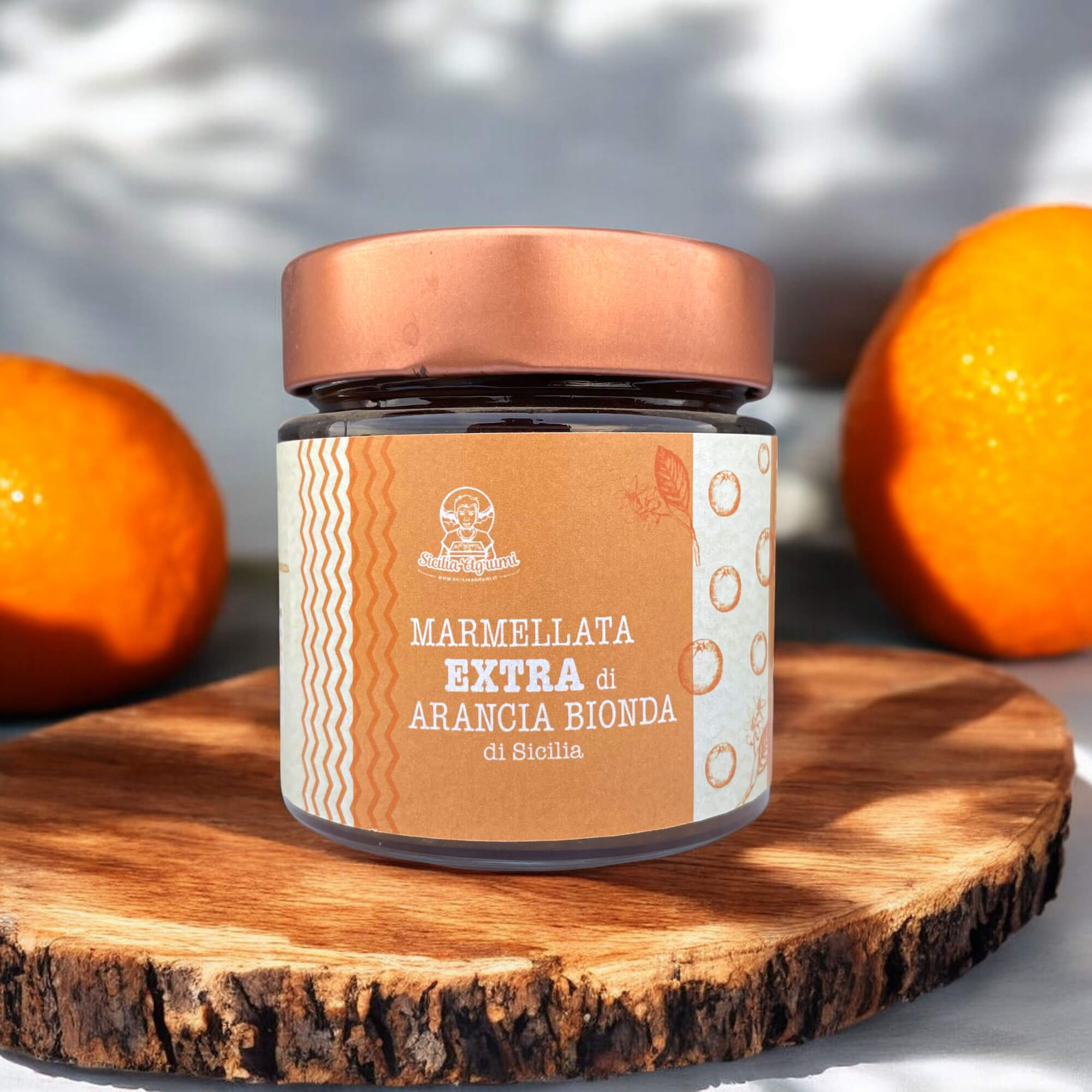
The Orange chutney is a thick, spicy and less sugary sweet and sour preserve than jam. Created to accompany savory foods: mature cheeses, roasts, white meats, burgers and sandwiches. Pulp, a small amount of zest, onion, vinegar and spices coexist inside. The goal is not to erase the natural bitterness of the citrus fruit, but to balance it with sweetness and acidity. Prepared calmly, it becomes one of those jars that make a cutting board or give character to a leftover.
Ingredients for approximately three small jars
- 800 g of cleaned oranges
- thin peel of an orange with edible peel
- 200 g of red onion
- 180 g of cane sugar
- 180 ml of apple cider vinegar or white wine
- 30 g of fresh ginger
- a teaspoon of mustard seeds
- half a teaspoon of salt
- chili pepper, cinnamon or cloves in minimal doses
Spices are a signature, not a mandatory list. Ginger and mustard are enough for a fresh chutney. Cinnamon and cloves make it more wintry; chili works with meats and cheeses. Use a maximum of two aromatic directions, otherwise the orange disappears.
Prepare oranges and zest
Peel the oranges, remove the seeds and damaged parts and cut the pulp into pieces, collecting the juice. First take a thin colored peel and cut it into fillets. If you’re worried about bitterness, boil it twice, changing the water. Do not use a large amount of albedo: it contains useful pectin, but in chutney it can make the taste harsh and cover the sweet and sour component.
Cooking step by step
- Slice the onion thinly and place it in a large saucepan.
- Add oranges, juice, zest, vinegar, sugar, salt and spices.
- Bring to a light boil, then lower the heat.
- Cook uncovered for 45-60 minutes, stirring more often towards the end.
- Turn off when the bottom is visible for a moment by passing the spoon.
Hot chutney seems thinner than cold chutney. Don’t wait for it to become a dry paste: by resting it acquires consistency and the spices harmonize. If the fruit is very juicy it will take a few more minutes.
How to correct the balance
Taste only after allowing a teaspoon to cool. If it’s cloying, add vinegar a little at a time; if it is aggressive, a small amount of sugar. A pinch of salt often solves a flat taste. Avoid adding water at the end, because it dilutes and prolongs the cooking time again. The bitterness of the zest diminishes with rest, but does not disappear completely.
Pairs that work
With pecorino and blue cheeses, half a teaspoon per bite is enough. With pork, duck or chicken use it as a side sauce, not as a thick glaze. In a sandwich it goes well with cold roast, grilled vegetables or smoked cheese. It can also become the base of a dressing: dilute a spoonful with oil and a little orange juice.
Storage: refrigerator or pantry?
For simple home use, pour the chutney into clean jars, let cool and store in the refrigerator for two to three weeks. Stable preserves at room temperature require sterilized jars, correct filling and heat treatment according to reliable guidelines for acidic preserves. Don’t improvise times and vacuum packing. After opening, always use a clean spoon and check the smell, cap and surface.
Which oranges to choose
Navels make a sweet, approachable chutney; Tarocco and Moro add color and greater complexity; bitter ones require a differently calibrated recipe. If you include zest, only use fruits with edible peel. Organic Sicilian navel oranges are a reliable and seedless base. Preparing chutney is also a good way to use the most marked fruits in the box, as long as they are healthy and free of mold.
Frequently asked questions before you start
Can I prepare or organize everything in advance?
It depends on the preparation, but one rule is always useful: keep the most delicate parts separately and combine them as late as possible. Juice and zest lose their scent over time, while humidity and temperature changes change consistency. If working ahead, use clean containers, date and maintain the cold chain when the recipe calls for it. A fresh result often comes from good organization, not from a last ingredient added to correct.
How do I choose suitable oranges?
Look for fruit that is heavy for its size, intact and consistent with use: small caliber for lots of juice, medium or large for segments and presentation. If the recipe uses zest, check that the peel is declared edible. The variety matters, but its harvest time also matters. Tasting the fruit before measuring out sugar, vinegar or spices avoids most errors and makes each preparation suitable for the box that actually arrived.
From the recipe to your order: choose Sicilia Agrumi
Would you like to start with fresh Sicilian citrus fruit suited to this recipe? Discover and buy the recommended product from the Sicilia Agrumi shop. Choose the box size according to the number of people you are serving: the fruit comes directly from the grower, and anything left can be enjoyed fresh or used in another recipe.


