


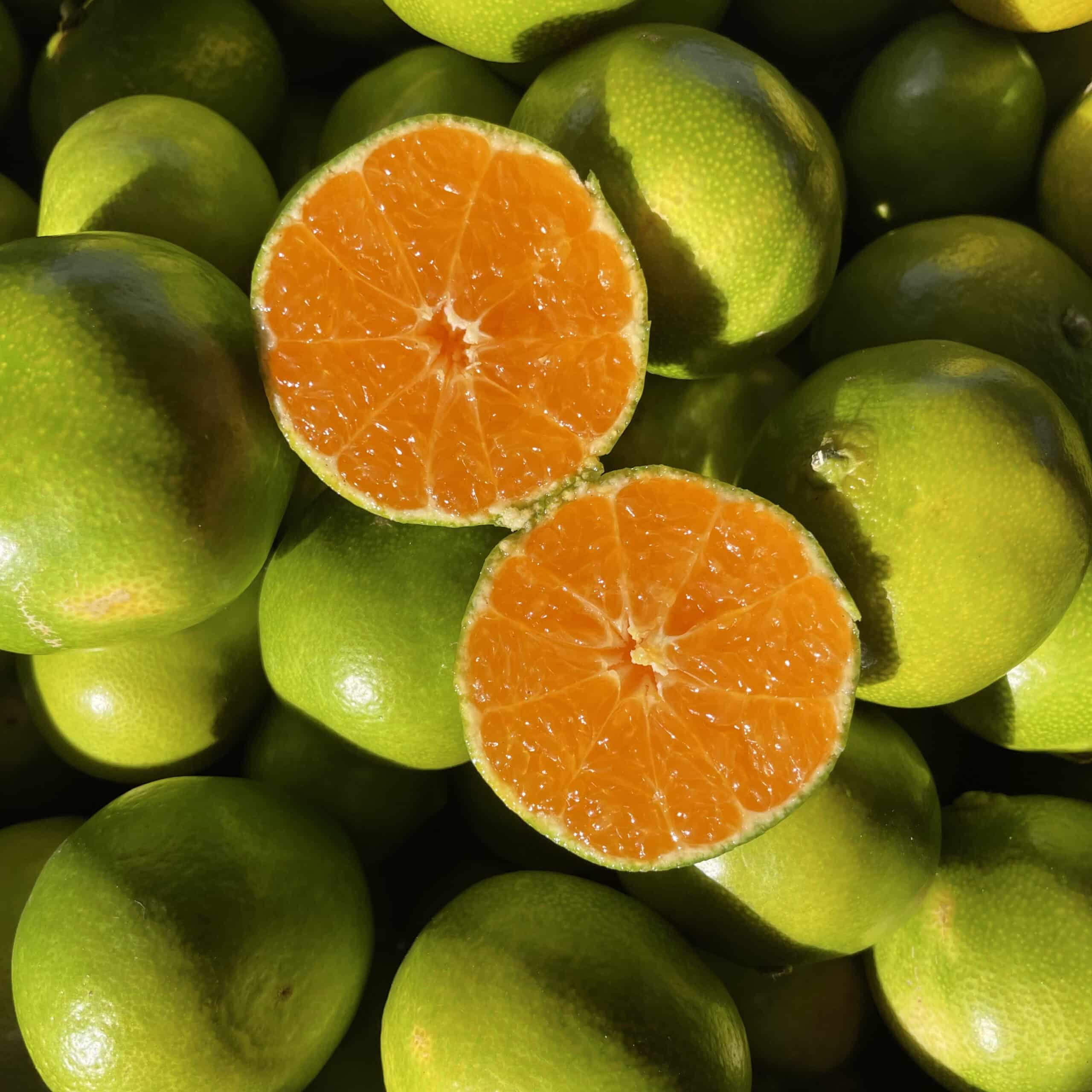
A green Miyagawa can already be sweet and juicy. The external color does not always proceed at the same pace as the internal maturation, especially in the initial stages of the season and with temperatures that are still mild.
What you really need to know
The loss of the greenness of the rind is also linked to temperatures. For this reason, a citrus fruit harvested ripe in a hot climate can retain chlorophyll: it is not an automatic proof of unripeness.
The practical test is worth more than the label
Evaluate weight, aroma, elasticity of the peel and taste. A fruit heavy in size, intact and aromatic tells more than the search for a perfectly uniform orange.
Differences that help you choose
Miyagawa is an early satsuma, generally easy to peel and often low in seeds. It should not be judged with the same aesthetic criteria as a late mandarin that arrives when the nights are colder.
Origin, name and description are not synonymous
When purchasing green Satsuma Miyagawa, it is advisable to distinguish the name of the recipe or variety from the declared origin and any certifications. The description in the shop serves to understand format and use; the product label remains the reference for ingredients, net weight, conservation and origin. It’s a small step, but it avoids wrong expectations and comparisons based only on price.
Taste, consistency and yield
The pulp can be sweet with a light freshness; the peel is often thin and does not stick too much. The yield depends on the harvest: small changes in size or color are natural.
Taste before adding anything else
Salt, sugar, acidity and aroma change from one product to another. The most reliable method is to start with a small quantity, taste and correct only later. In this way the seasoning does not cover the raw material and it is better understood which dose to repeat. In recipes for multiple people it is useful to note the quantity used: next time you won’t have to fumble.
How to use it in everyday cooking
Eat it fresh, divide it into wedges for salads, use it in yogurt or fruit salads and squeeze the softer specimens. The zest is used only if indicated as edible and after careful washing.
Three destinations before ordering
To consume green Satsuma Miyagawa well, assign three possible uses before purchasing: one immediate, one for the next meal and one as a spare. It can be an appetizer, first course and side dish or fresh consumption, sauce and cooked recipe. This organization is more useful than an endless list of ideas, because it links the quantity ordered to the actual meals of the week.
Storage after arrival or opening
Keep it in a cool, ventilated place for quick consumption; use the refrigerator to slow down spoilage. Open the box, eliminate damp packaging and separate the fruits with the most delicate skin.
Check the packaging
Before storing the product, check that the container is intact and read the manufacturer’s instructions. After opening, use clean utensils, close well and respect the temperature and times indicated on the label. For fresh fruit, separate the ripest specimens; for preserves and condiments avoids contamination with crumbs or already used cutlery. They are only apparently trivial attentions.
Common mistakes to avoid
Wait until it turns dark orange; close it in plastic with condensation; discarding a fruit just because it is green; confusing a surface stain with rot. The final test remains the tasting.
How much to buy
To know the variety choose a small quantity; a cassette is suitable for families or juicers. Calculate several days of consumption and immediately allocate the ripest specimens to the juice.
Small size or spare?
A small format is suitable for the first test and allows you to understand the real consumption. A larger quantity makes sense when the product goes into multiple recipes, when cooking for a family or when storage is simple and well planned. Convenience does not always coincide with the lowest unit price: what remains unused costs more than a carefully chosen package.
Frequently asked questions before purchasing
Is availability always the same?
No. Fruit and vegetables follow harvest and vintage; even preserves and specialties can end while waiting for new production. For this reason, the link to the shop must be checked when ordering. If a product is not available, it is better to choose an alternative with similar function rather than forcing a substitution that completely changes taste or yield.
How to understand if it is the right product?
Reread the recipe objective and compare it with the characteristics of green Satsuma Miyagawa: intensity, consistency, format and quantity. If you want a taste, start with the most manageable package; if you already have a menu, calculate the portions. The advantage of a well-made shopping guide is precisely this: it does not push you to buy at random, but reduces the risk of choosing a product unsuitable for your intended use.
From advice to purchase on Sicilia Agrumi
If you want to try this specialty, check availability, format and price of green Satsuma Miyagawa in the Sicilia Agrumi shop. Before completing the order, check the updated description and plan when to use it: this way the product arrives with a precise destination and does not remain forgotten in the pantry or refrigerator.


