


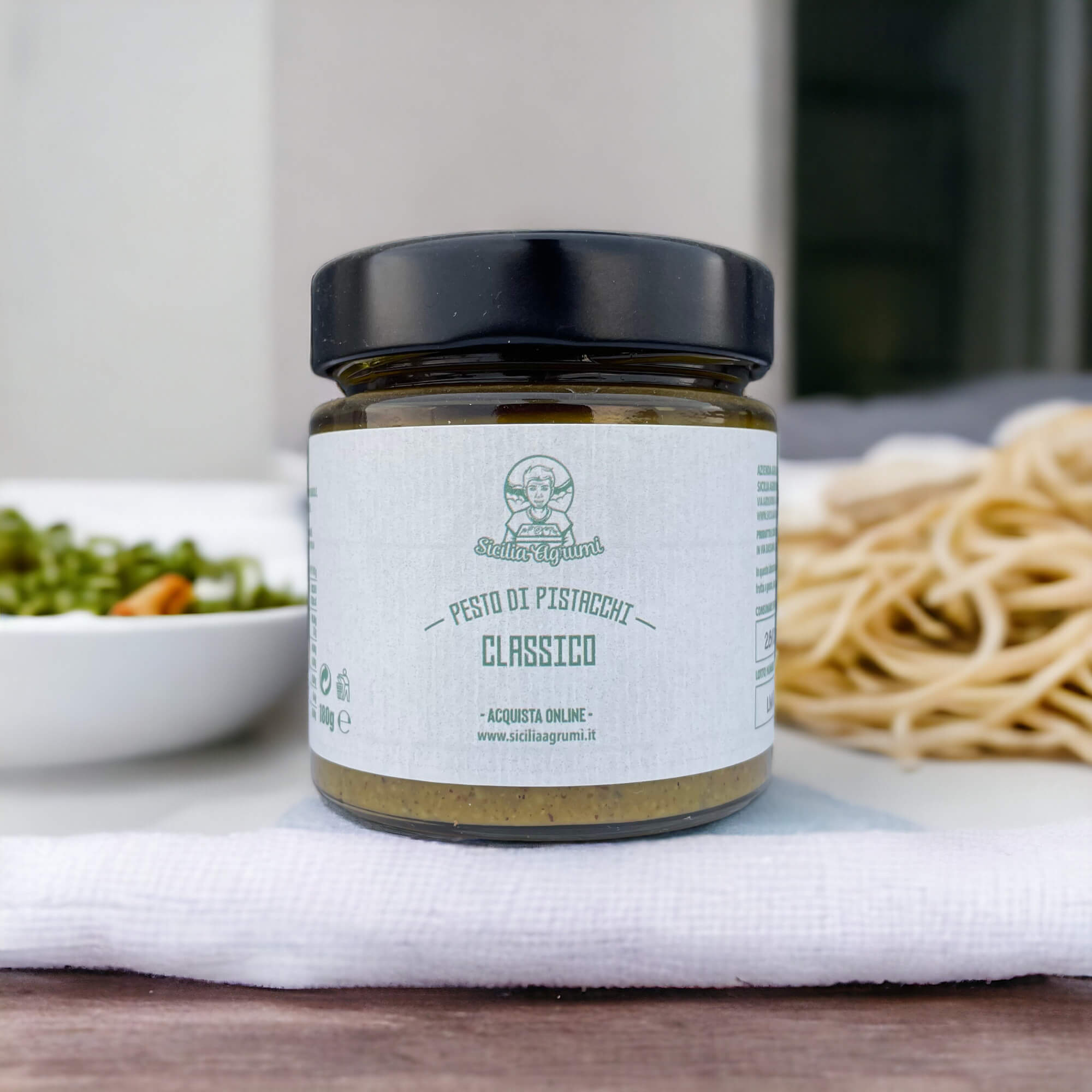
Pasta with pistachio pesto can become heavy very quickly when cream is used as the shortcut to a silky sauce. Pistachios already contain plenty of their own fat; what the dish really needs is starchy pasta water, controlled heat and a good emulsion. The result tastes cleaner and the pistachio remains recognisable rather than disappearing under dairy.

Choosing the pasta
Rigatoni, paccheri, casarecce and busiate hold a thick pesto well, while linguine or spaghetti work beautifully if the sauce is loosened a little more. There is no mandatory shape. The additions matter too: with prawns or fish a long pasta or casarecce can feel lighter; with sausage or mortadella a short shape is particularly practical.

Quantities for four
Allow 320 g pasta, 150-180 g pistachio pesto, 30-40 g grated cheese if desired, black pepper and at least a cup of pasta cooking water. Finish with chopped Sicilian shelled pistachios for texture.
Do not fry the pesto
Prolonged high heat flattens the aroma of a nut pesto. Put it in a wide pan off the heat or over the lowest flame and loosen it with a little pasta water. Transfer the pasta when it is still al dente and toss briefly, adding more water a spoonful at a time.
The starch makes the sauce creamy
Pasta water contains starch, which helps the water and oil in the pesto bind into a smooth coating. It is the same basic principle behind many creamy Italian pasta dishes that contain no cream at all. If the sauce tightens while you toss it, do not immediately pour in more oil: try a little hot pasta water first.
Lemon works, but use a light hand
A very fine grating of lemon zest can lift the dish, especially with seafood. It should remain an accent. Pistachio is relatively delicate, and too much zest, garlic or strongly aged cheese can cover it. With this ingredient, taking one element away is often more useful than adding another.
Three pairings that make sense
Prawns bring freshness and a marine sweetness; mortadella creates a rich salty contrast; quickly blistered cherry tomatoes add acidity. In each case keep the pesto at the centre of the dish rather than using it simply as a green background colour.
The last minute matters most
Finish off the heat with chopped pistachios and, only if needed, a small drizzle of oil. Properly emulsified pesto should cling to the pasta rather than leave an oily pool at the bottom of the plate. It is a quick recipe, but the final two minutes determine whether it feels elegant or heavy.


