


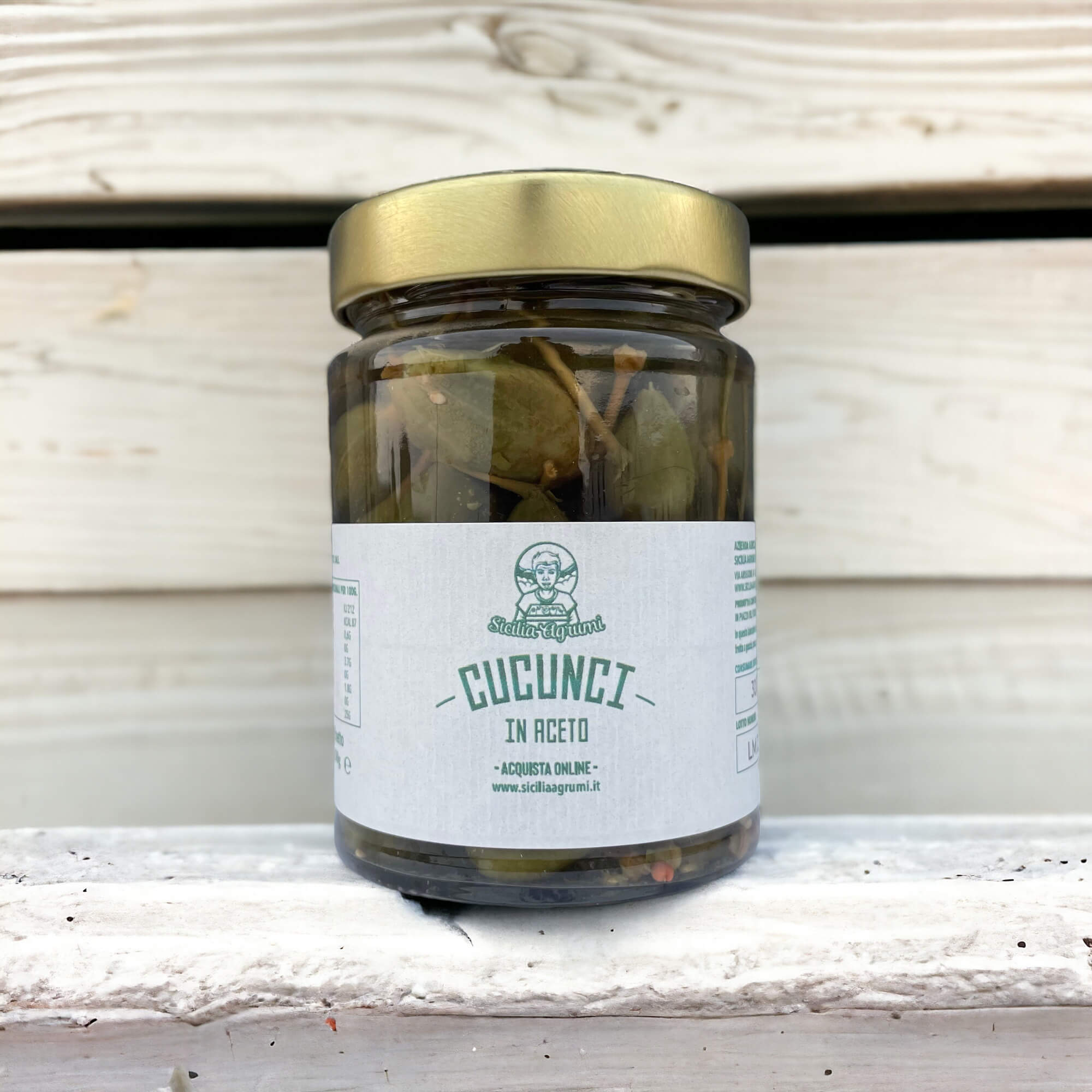
Capers and cucunci are often placed in the same department, but they are not two sizes of the same ingredient. The caper is a bud harvested before it opens; the cucuncio is the elongated fruit that comes after the flower.
Let’s start with the concrete choice
The difference can be seen immediately: the caper is small and compact, the cucuncio is larger, fleshy and often has a stem. This structure explains why the former works well as a condiment and the latter can be served whole in an aperitif.
A simple control in the kitchen
The trade word “caper flower” is sometimes used for cucunci, but is botanically imprecise. The true flower is the one that blooms; caper and cucuncio are bud and fruit respectively.
Differences that help you choose
Pantelleria protects Cappero di Pantelleria PGI. Cappero delle Isole Eolie PDO covers both capers and caper berries from the entire Aeolian archipelago, including Salina, Lipari, Vulcano, Filicudi, Alicudi, Panarea and Stromboli. Caper plants can also grow in other dry, coastal or rocky parts of Sicily, but ‘Sicilian capers’ alone does not certify Pantelleria, Salina or the Aeolian Islands: check the label.
Origin, name and description are not synonymous
When purchasing capers or cucunci, it is advisable to distinguish the name of the recipe or variety from the declared origin and any certifications. The description in the shop serves to understand format and use; the product label remains the reference for ingredients, net weight, conservation and origin. It’s a small step, but it avoids wrong expectations and comparisons based only on price.
Taste, consistency and yield
The caper offers a concentrated aromatic hit; the cucuncio has more obvious pulp, seeds and a chew similar to a small pickle. Salt, brine or vinegar modify both, so the comparison must also be made considering the governing liquid.
Taste before adding anything else
Salt, sugar, acidity and aroma change from one product to another. The most reliable method is to start with a small quantity, taste and correct only later. In this way the seasoning does not cover the raw material and it is better understood which dose to repeat. In recipes for multiple people it is useful to note the quantity used: next time you won’t have to fumble.
How to use it in everyday cooking
Choose capers for puttanesca, sauces, potatoes, fish and caponata. Bring cucunci to the table with olives, cheeses, cured meats or grilled vegetables; cut into slices they can go into sandwiches and salads. They are not perfect substitutes, but they can coexist in the same starter.
Three destinations before ordering
To consume capers or cucunci well, assign three possible uses before purchasing: one immediate, one for the next meal and one as a spare. It can be an appetizer, first course and side dish or fresh consumption, sauce and cooked recipe. This organization is more useful than an endless list of ideas, because it links the quantity ordered to the actual meals of the week.
Storage after arrival or opening
Salted products must be kept dry and covered; those in vinegar or brine must remain immersed in the liquid, following the instructions after opening. Do not decant unnecessarily and do not use dirty forks.
Check the packaging
Before storing the product, check that the container is intact and read the manufacturer’s instructions. After opening, use clean utensils, close well and respect the temperature and times indicated on the label. For fresh fruit, separate the ripest specimens; for preserves and condiments avoids contamination with crumbs or already used cutlery. They are only apparently trivial attentions.
Common mistakes to avoid
Buying cucunci thinking they are giant capers; ignore conservation; add salt before tasting; present a product that does not declare it as PDO or PGI. The Sicilian origin is one piece of information, the protected denomination is another.
How much to buy
For an aperitif, calculate approximately a small portion of cucunci per person; to season, add the capers by spoonfuls. If you want to compare them, buy a size of each and serve them separately at the first tasting.
Small size or spare?
A small format is suitable for the first test and allows you to understand the real consumption. A larger quantity makes sense when the product goes into multiple recipes, when cooking for a family or when storage is simple and well planned. Convenience does not always coincide with the lowest unit price: what remains unused costs more than a carefully chosen package.
Frequently asked questions before purchasing
Is availability always the same?
No. Fruit and vegetables follow harvest and vintage; even preserves and specialties can end while waiting for new production. For this reason, the link to the shop must be checked when ordering. If a product is not available, it is better to choose an alternative with similar function rather than forcing a substitution that completely changes taste or yield.
How to understand if it is the right product?
Reread the objective of the recipe and compare it with the characteristics of capers or cucunci: intensity, consistency, format and quantity. If you want a taste, start with the most manageable package; if you already have a menu, calculate the portions. The advantage of a well-made shopping guide is precisely this: it does not push you to buy at random, but reduces the risk of choosing a product unsuitable for your intended use.
From advice to purchase on Sicilia Agrumi
If you want to try this specialty, check availability, format and price of capers or cucunci in the Sicilia Agrumi shop. Before completing the order, check the updated description and plan when to use it: this way the product arrives with a precise destination and does not remain forgotten in the pantry or refrigerator.


