


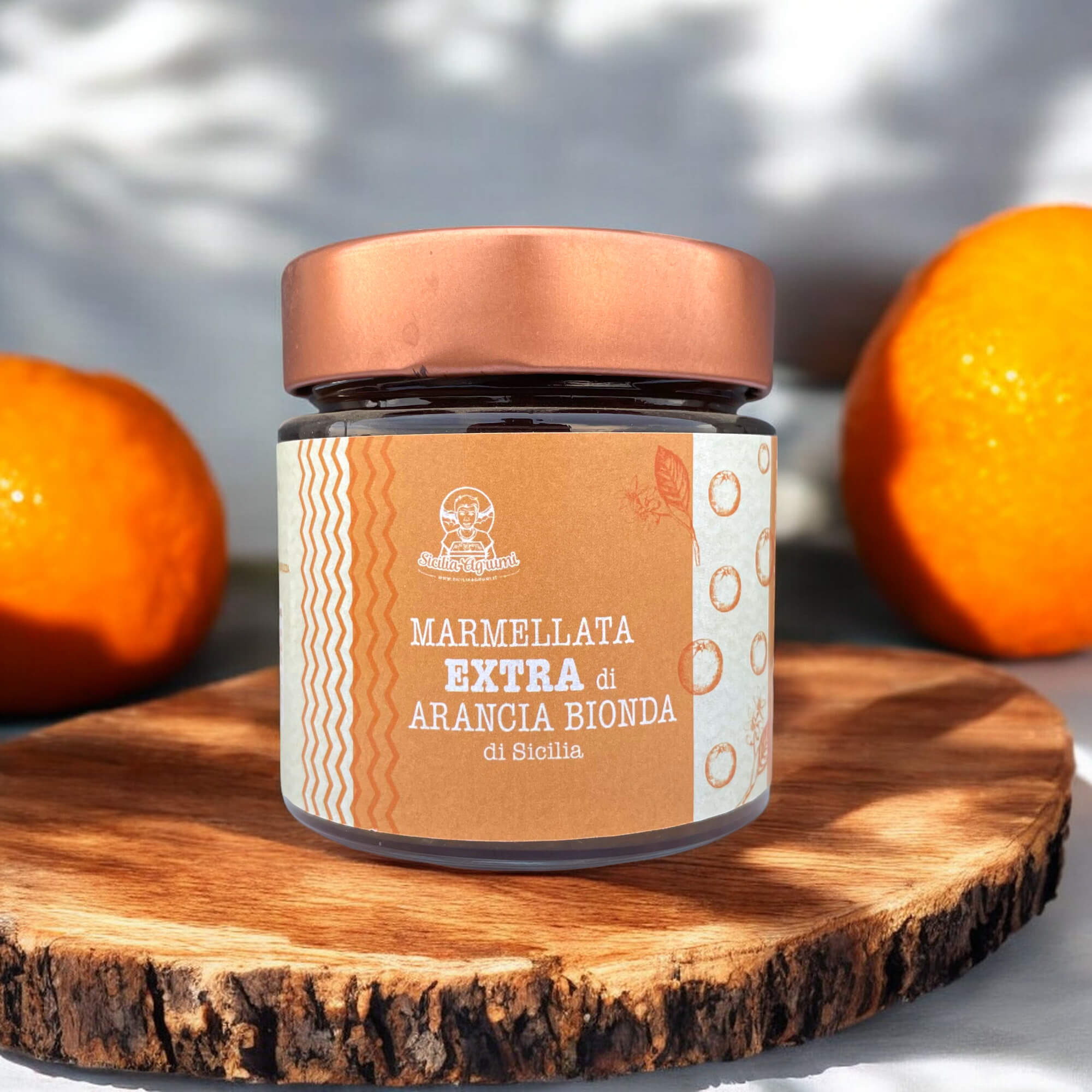
At an English breakfast table, “marmalade” and “jam” already sound like different things. In Italian everyday speech, however, marmellata is often used for almost any fruit preserve. Labelling rules are more precise than kitchen conversation, which is where the distinction becomes useful.

In the Italian market, marmellata remains associated primarily with citrus preparations, while confettura is used for preserves made from other fruits under the relevant legal categories. Orange, lemon, mandarin and grapefruit therefore sit naturally in the marmalade family.

The funny part: the word marmalade did not begin with oranges
The word traces back to Portuguese marmelada, a preserve made from quince, marmelo. That gives us a small linguistic paradox: modern commercial usage strongly links marmalade with citrus, while the history of the word runs through a completely different fruit.

Food words travel. Their recipes and legal meanings change from one country to another, while everyday language carries on at its own pace. That is why translating preserve names word for word can produce odd results.
What actually changes in the jar
The distinction is not just vocabulary. Legal categories set rules around composition, fruit quantity and naming. “Extra” categories have more demanding composition requirements than standard versions. That does not guarantee that every extra product tastes better; it means it meets a defined standard.
Citrus preserves can use flesh, juice, peel and aqueous extracts. Peel is particularly important because it brings aroma, bitterness and pectin. Compare a bitter-orange marmalade with a sweet blond-orange one and the difference is obvious even though both carry the same broad name.
Bitter-orange versus sweet-orange marmalade
With bitter oranges, sugar creates a deliberate counterpoint to the peel. The result is more complex and less immediately sweet. With Navel or other sweet oranges, the preserve is softer and often easier as an everyday breakfast spread.
Tarocco and Moro add another variable because pigmentation and aroma develop through the winter. A blood-orange marmalade made early in the season may not look exactly like one made several weeks later. Natural fruit does not arrive with a Pantone colour code.
What does ‘extra’ mean?
“Extra” is not merely marketing language. It identifies a regulated category with specific composition requirements and a higher minimum fruit content than its standard counterpart. It is useful information, but the ingredient list still matters because two products in the same category can taste very different.
A short ingredient list does not automatically guarantee quality, yet it helps you understand the style of a preserve. The goal with citrus should be simple: after the sugar and cooking, the fruit should still be recognisable.
Rules change, so old blog posts can become misleading
European rules governing jams, jellies and marmalades have been updated in recent years and incorporated into national law. For professional labelling, always check the current legislation rather than relying on any blog article, including this one.
For a consumer, the practical lesson is easier: preserve names on a commercial label are not always casual synonyms. At the breakfast table, of course, nobody needs a legal dictionary before buttering toast.
Why the distinction is especially useful with Sicilian citrus
Citrus shows beautifully how variety, peel and acidity change a preserve. Bitter orange, blond orange and blood orange can begin with a similar method and end as three very different jars. Browse the Sicilia Agrumi sweet pantry when the preserves are available and taste the difference rather than memorising definitions.


