

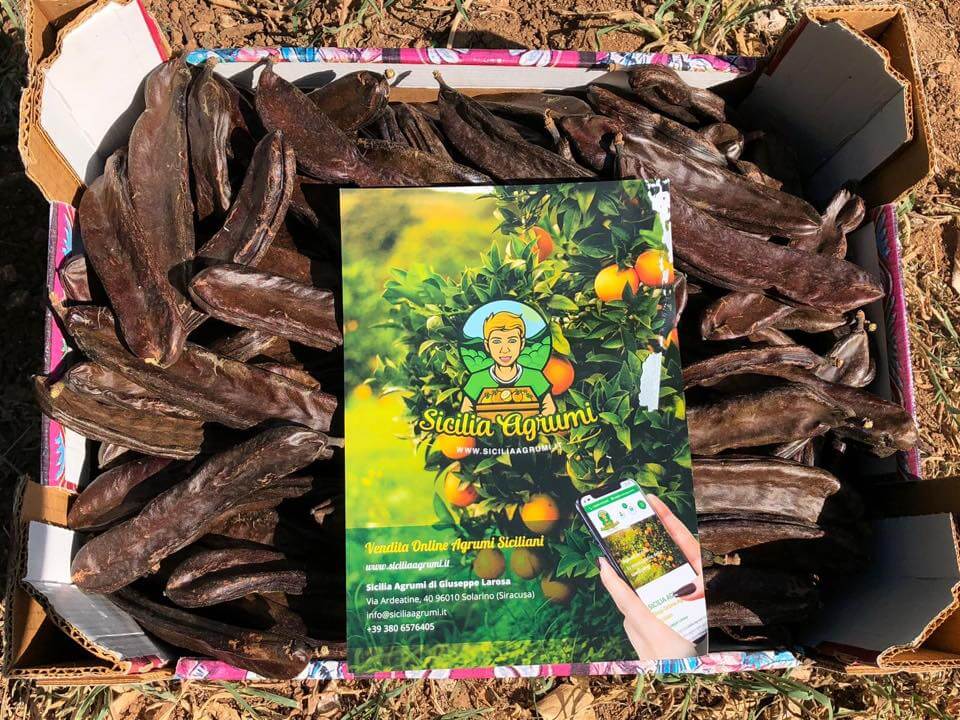
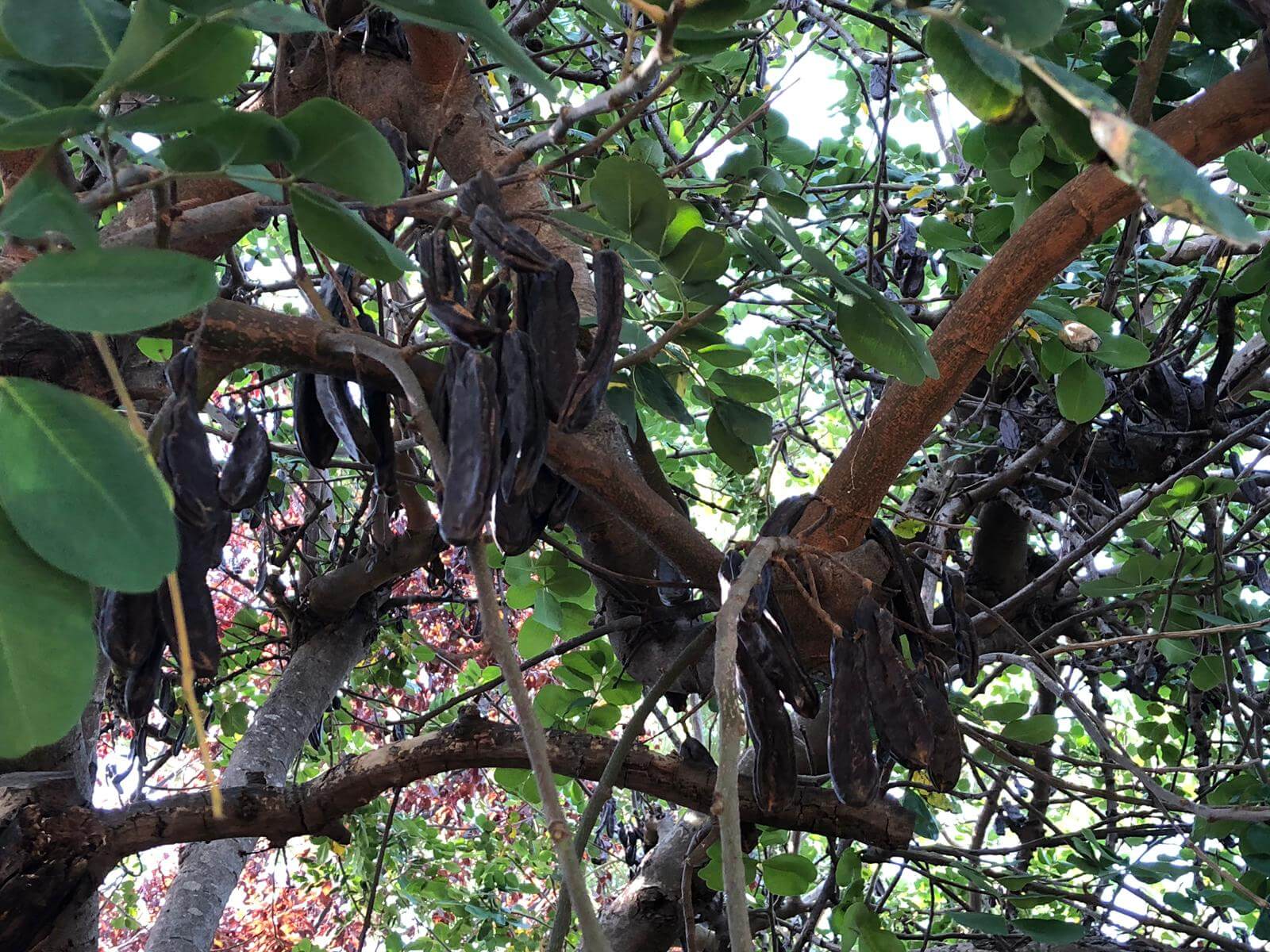
The carob tree is an evergreen tree grown mainly in central and southern Italy, Spain, Portugal and northern Africa, and belongs to the fabaceae family, the same as peas and broad beans. It is for all intents and purposes a legume with brown pods and a distinctive smell, about 15 cm long and containing seeds inside. The flavor of carob is very similar to that of cocoa, and being caffeine-free it is perfect for preparing desserts and dishes of various kinds. Carob beans are used, after processing, as cocoa substitutes – in fact, carob flour is chosen as an ingredient in some recipes for those who are allergic to cocoa -, as food additives – carob flour is an excellent thickener, used in many food preparations ranging from ice cream to canned meats – and as diet foods, since they contain a lot of minerals (potassium, calcium, phosphorus, magnesium, zinc, selenium and iron) and perform antioxidant, gastro-protective functions. If consumed during pregnancy, they can also help alleviate typical nausea; being gluten-free, locust beans can also be consumed by those with celiac disease.
HOW TO USE LOCUST BEANS
Carob can be a great ally for those who love cocoa but, for whatever reason, have to do without it. To create tasty carob snacks, for example, get fresh carob pods, bake the pods at 120° for about ten minutes (or more, if the pods are particularly pulpy), and munch on them during your snack.
Homemade pasta with Carob flour:
To make homemade pasta more fragrant, colorful and with an extra kick, try adding some carob flour, calculating 100 g for every 400 g of wheat flour.
Carob spread:
If you love creamy spreads, you can make one starting with locust bean flour. Using a food processor, grind some toasted hazelnuts, add 1 or 2 tablespoons of locust bean flour, some rice oil and sweetener until you get the desired consistency-the result will be a luscious and energetic spread!
To flavor desserts:
If you like the taste of carob flour, you can use it to enrich all kinds of desserts: cakes, tarts, cookies, muffins, etc. The taste of carob flour goes perfectly with anything that goes well with cocoa!
Curiosities
The seeds of the carob tree are also called carats: this appellation came about because of their uniformity, since each one, in fact, weighs exactly 1/5 of a gram, and they were used by ancient civilizations to weigh valuables!


