


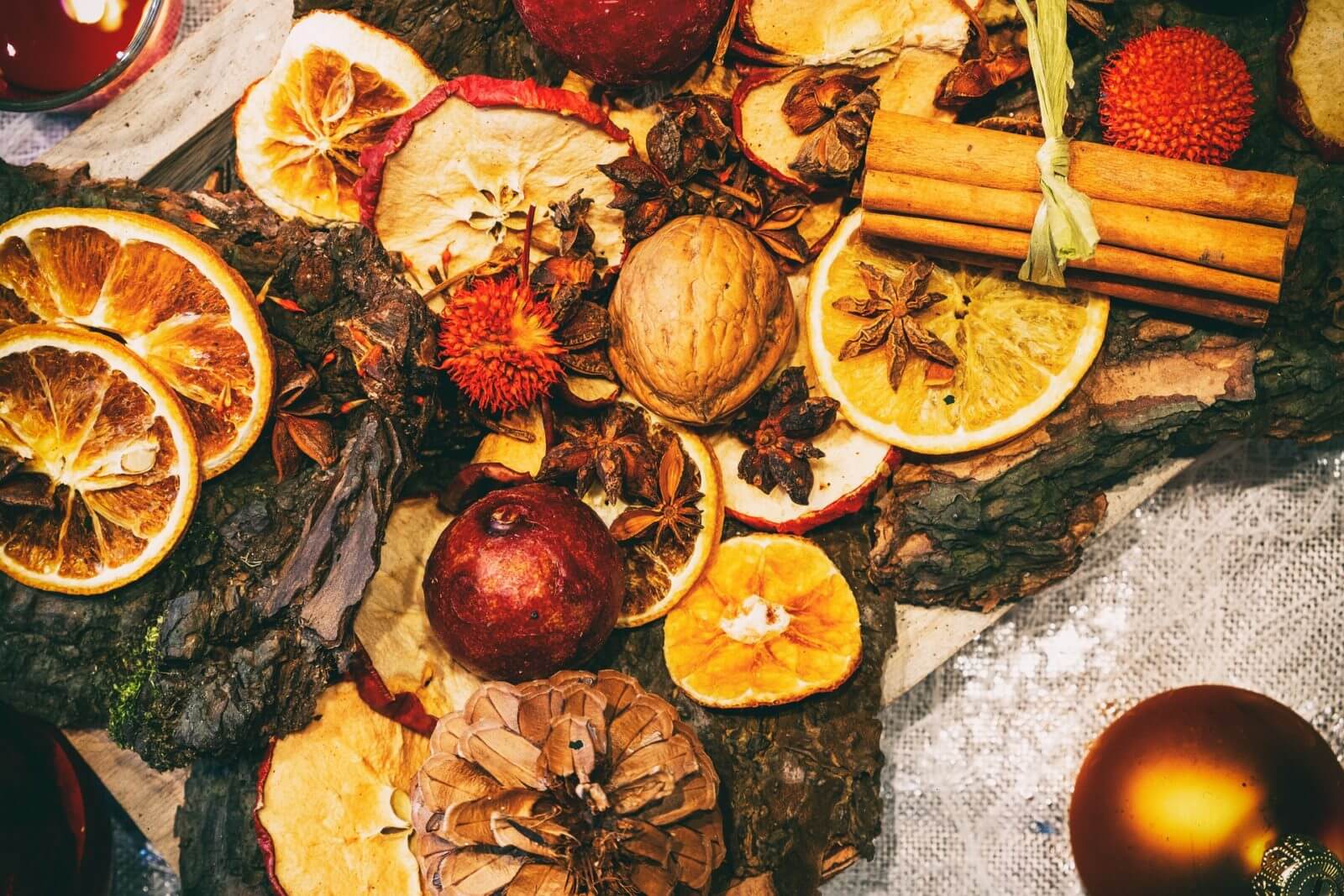
Dried orange slices are strongly associated with Christmas decorations, but they can also be useful in the kitchen for tea, cocktails, cake decoration and citrus powder. Decide on the final use before you start: a slice destined for a drink needs food-handling care that no longer matters once a decorative slice has been glued to a wreath.

Cut even slices
Wash and dry the oranges well. For anything you plan to eat, choose fruit with peel suitable for consumption. Cut slices about 3-5 mm thick. If half the tray is much thicker than the rest, drying will be uneven. A mandoline helps, but a sharp knife is perfectly adequate.
Drying in the oven
Arrange slices on a rack or baking paper without overlapping. Set a low oven, roughly 70-90°C, and allow moisture to escape by opening the door periodically if ventilation is poor. Turn the slices during drying. Several hours may be needed; thickness, juiciness and the particular oven all change the timing.
How do you know they are dry?
A slice intended for storage must be dry through the centre rather than simply crisp around the edge. Moisture trapped in the flesh can encourage mould once the slices are sealed in a jar. Let them cool completely before judging texture, because warm fruit may still feel soft.
Using a dehydrator
A dehydrator offers steadier low temperatures, often around 50-60°C, but generally takes longer. Its advantage is consistency. There is still no universal number of hours: a juicy Navel and a thin slice from another variety will not behave identically.
Food or decoration
Store edible slices in a clean, dry, closed container away from humidity. Decorative slices can be combined with cinnamon, pine cones and branches, as in older Christmas craft ideas already published on the Sicilia Agrumi blog. Once treated with glue, varnish or craft materials they should never go back into food or drinks.
Which oranges look best?
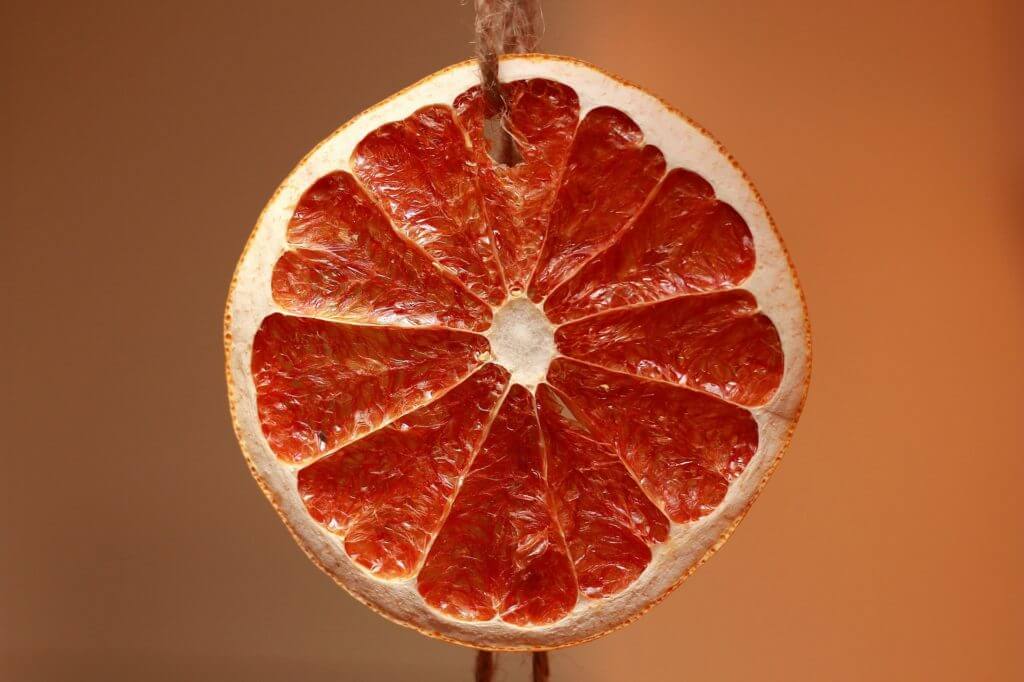
Moro oranges can produce dramatic dark centres, Tarocco gives more variable red tones and Navel gives pale regular slices. Appearance depends on the real fruit and the season, so two batches can dry into surprisingly different colours.
Use the imperfect slices too
If they are fully dried but not pretty enough for decoration, grind them into citrus powder for cake batters, tea or flavoured salt. It is an easy way to use the slices that will never make it onto a cake or a Christmas wreath.


