


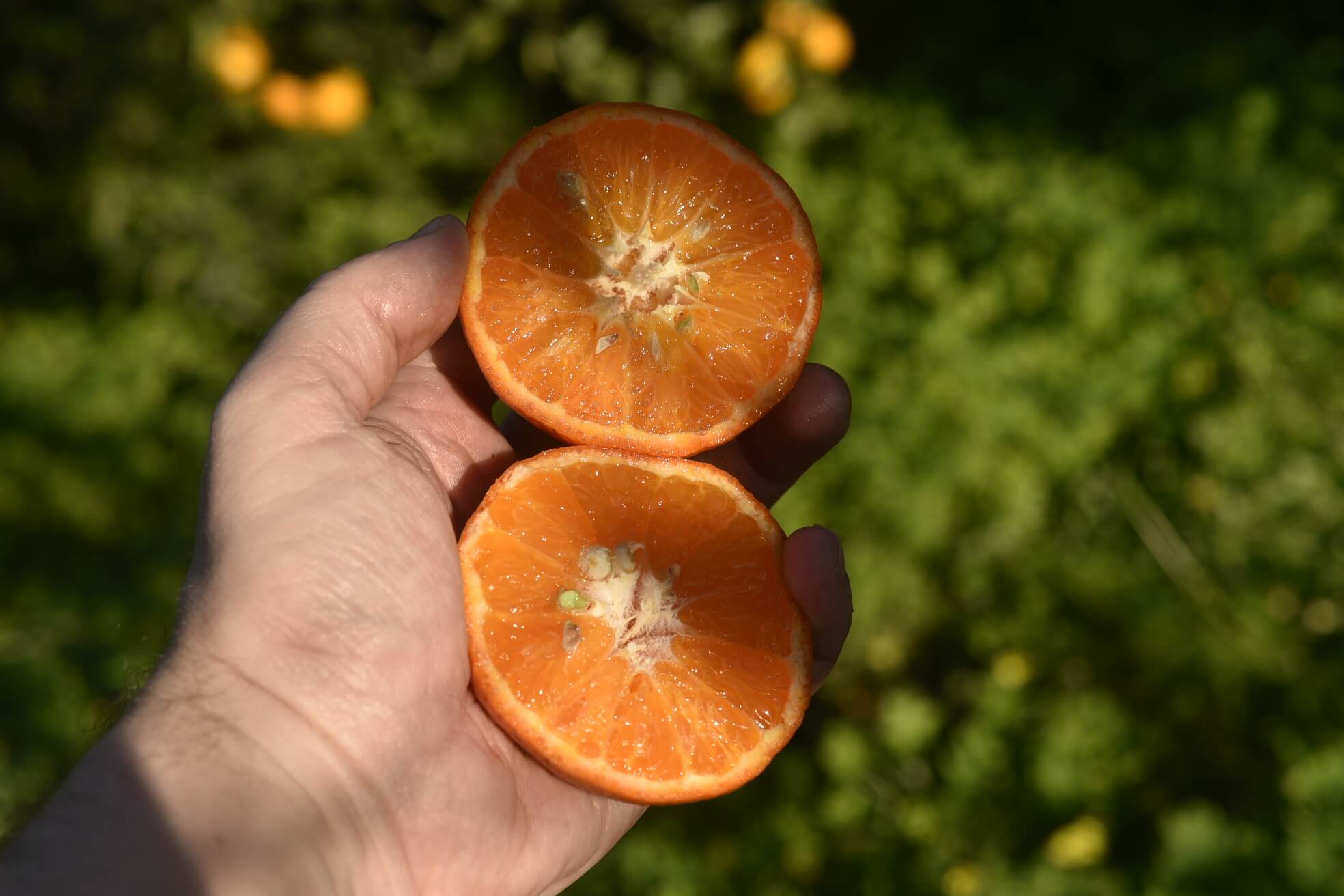
Mandarins, clementines and mandarin-orange hybrids are often grouped together on the fruit counter. That makes sense: they are small citrus fruits, easy to peel and convenient to eat in segments. But they are not simply three names for one fruit. Their parentage, fragrance, number of seeds, ripening period and even the way the peel separates from the flesh can differ.

Mandarin: fragrance first
Traditional mandarins often have an especially intense perfume, thin loose peel and may contain several seeds. Their shape is frequently a little flattened. Sicilia Agrumi follows different cultivars through the season, from early Miyagawa to Havana and later Marzaiolo, so the word “mandarin” itself covers a surprisingly broad range of fruit.

Clementine: sweet, practical and usually low in seeds
Clementines belong to the broad mandarin hybrid group and are popular for sweet juicy flesh and usually few or no seeds, although pollination can affect seed formation. They peel easily, but the skin often sits slightly tighter than on a classic loose-skinned mandarin.
What does “mandarancio” mean in Italy?
The Italian word mandarancio is a broad term used for several hybrids between mandarin and other citrus, especially oranges. It does not describe one universal cultivar. Reading the cultivar name is far more useful: Nova, for example, comes from Orlando tangelo crossed with clementine.
Primosole, Nova and later cultivars
In the Sicilia Agrumi calendar Primosole generally opens the autumn season, Nova follows and later cultivars extend availability towards the end of winter. A small citrus fruit bought in October therefore cannot be expected to be identical to one delivered in March: cultivar and ripening conditions have changed.
Can you identify them without a label?
Shape and peel provide clues, not absolute proof. Mandarins are often flatter and strongly scented; clementines tend to be rounder and more regular; many hybrids are larger with slightly tighter peel. Seeds are an indication but not a mathematical rule.
Which one should you buy?
If you enjoy a very aromatic citrus and do not mind seeds, try Sicilian mandarins. For children’s snacks and easy peeling, clementines are often convenient. If you want a larger fruit balancing mandarin fragrance with orange-like juiciness, a hybrid such as Nova is worth trying.
One word can cause more confusion than the peel
Citrus botany is complicated because centuries of natural crossings and selection have produced countless cultivars. For a shopper, the useful question is less “is this technically a mandarancio?” and more “which cultivar is it, and when in the season was it harvested?” That is where the differences you can actually taste begin.


