


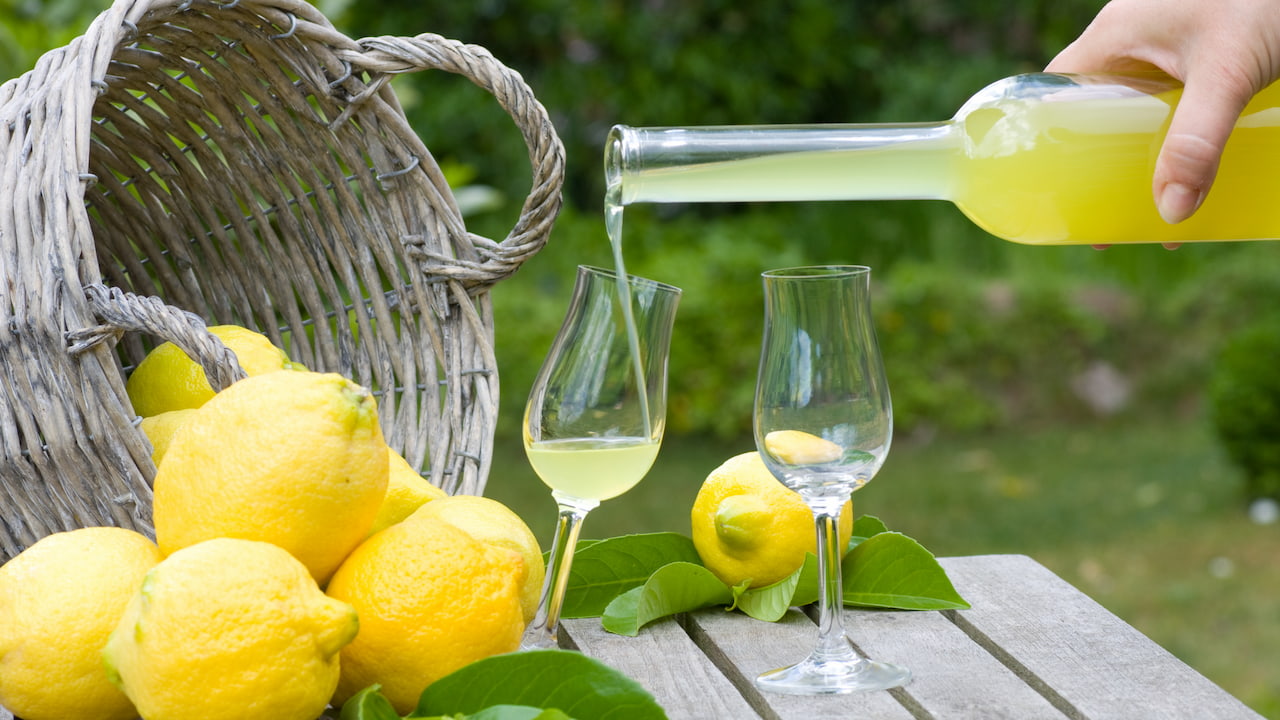
Limoncello is a classic digestif from southern Italy, specifically the Gulf of Naples and Sicily. This liqueur captures all the delicious citrus notes of the lemon without the sour bite. According to legend, Vincenza Canale, an innkeeper on the island of Capri, produced her own lemon elixir to offer guests at the turn of the century. She began offering it to her visitors as an afternoon cocktail, using simply lemon peel, water, a handmade neutral spirit and sugar, and had dubbed it Limoncello, a term taken from the ancient Capri word“limonillo.” Vincenza’s descendants did not start making Limoncello di Capri until much later, when they used her original recipe and patented the term“Limoncello.” Limoncello is also used in cooking to add a sweet, not sour, citrus flavor precisely because of its aromatic characteristics. It is crucial to note that there is no one limoncello recipe that applies to everyone; each region and family has its own unique recipe with different characteristics. Traditionally, Sorrento or Syracuse lemons are used. These can be hard to find in some parts of the world, so if you are not from these parts, get lemons at the best you can find. Lemons with a thick, oily peel are best to use. You can adapt our original Grandma ‘s recipe for homemade limoncello by combining old procedures with modern efficiency and you will have your own authentic recipe. But enough of the chatter, let’s get into the nuts and bolts of how to make our original Nonna’s recipe for homemade Limoncello.
Homemade limoncello: according to Grandma’s original recipe (ingredients and utensils)
The ingredients
– About 20 medium lemons
– 1.5 l pure grain alcohol -or, if you can’t get it- 100 proof vodka
– 3.5 cups water
– 5 cups granulated sugar
The tools
– Sealable glass jar (large, at least 3.5 4 lt)
– Coffee filters
– Water filter (like a Brita filter)
– Ladle
– Funnel
– Microplane Zester (Grater)
– Finished product bottles
Homemade limoncello: according to Grandma’s original recipe (procedure)
Since you will be soaking the lemon peel in alcohol, organic lemons are the best choice. In any case, soak and rub them in warm water to remove any chemicals, wax or debris that may have accumulated on the peel. To remove any contaminants in the grain alcohol, we run it through a water filter several times. This process may seem excessive, but trust us (or rather Grandma’s original recipe for homemade limoncello) when we say it will produce a much smoother and velvety final drink. After that, add the lemon zest. Be careful not to grate the white part of the zest because it has a bitter taste. Traditional peelers or vegetables generate fairly wide strips, while a microplane is more precise, avoiding the pith and producing a finer zest. The goal is to extract as many essential oils from the lemon peel as possible, so the more surface area, the better. Put all the lemon zest in a sealed jar with 1500 ml of alcohol and store it in a dark, cool place for between 1 and 3 months.
This is based on how rich you want your final limoncello to be. By shaking the mixture from time to time, you can speed up the process a bit. It’s time to prepare your simple sugar syrup once you’ve made sure the alcohol has taken all the color from the zest. Boil 3.5 cups of water and 5 cups of sugar for 5 minutes, then let it cool completely before adding to the limoncello. Your clear liquid should turn into a cloudy elixir right before your eyes. Some people recommend waiting a few weeks, but we follow Nonna’s original recipe for homemade Limoncello and have found that straining the lemon zest with a funnel lined with an unbleached coffee filter works well. (Those paper filters used to make American-style coffee work just fine). Note that Grandma used a cloth 🙂 Very well, now transfer with ladle and funnel the limoncello into the bottles. If necessary, replace the coffee filter. Although one filtration step may be sufficient, we filter our limoncello several times to achieve a silky smooth end result.
In conclusion
Put some limoncello and a couple of small glasses in the freezer to reach serving temperature before tasting the fruits of your effort (for quality control, of course). That’s it, enjoy your homemade limoncello using Nonna’s original recipe. and don’t forget to offer it to all your guests after a good meal…that’s what limoncello is for!


