


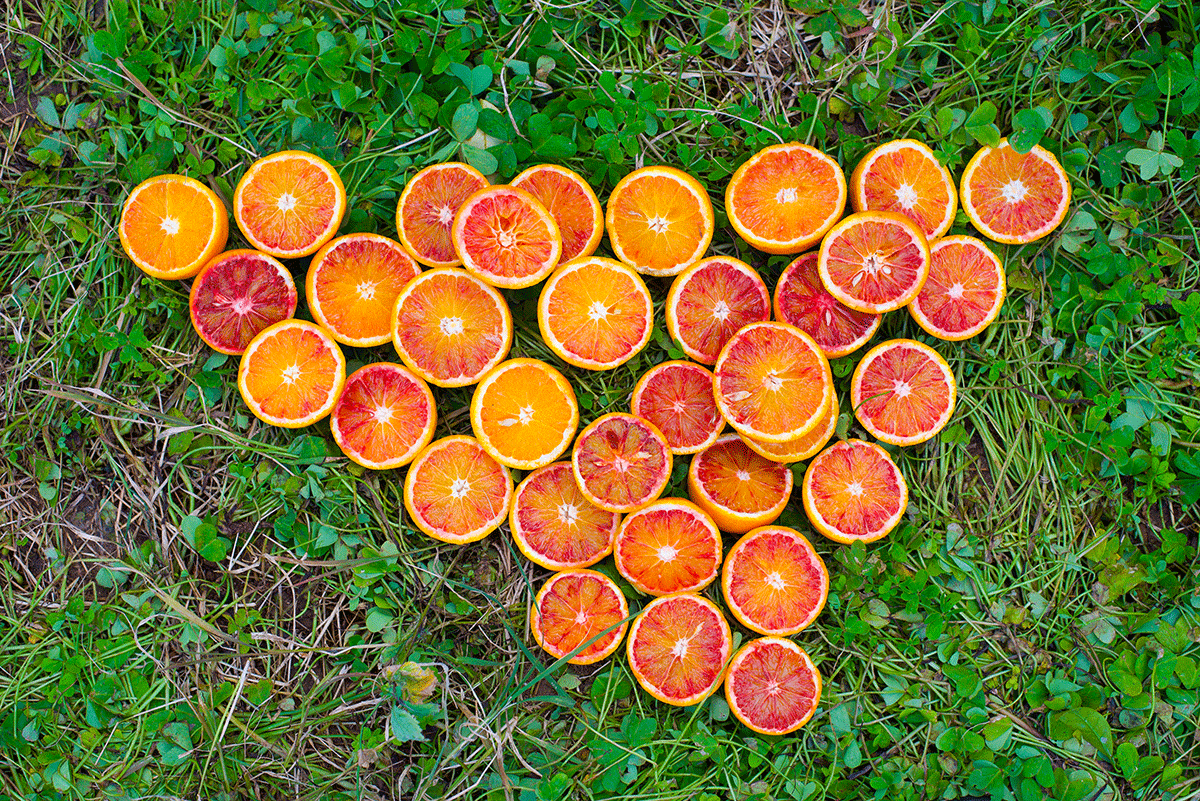
Oranges are the most widely grown citrus fruits in the world, and although their main use is for fresh consumption, a significant portion is destined for industrial processing. This fruit has a myriad of varieties, the fundamentals of which we will discover today, classifying them according to certain characteristics, such as ripening periods, type of coloring (internal and external), and acid content. A primary distinction must also be made between sweet and bitter oranges: the former belong to the variety commonly found on our tables, while bitter oranges are usually intended for industrial use.
THE BLONDE ORANGES

They are the most widely used by the processing industry because they have a high juice yield and are not very bitter to the palate. Composed of juicy, vitamin-rich segments, with colors ranging from yellow to deep orange, blond-fleshed oranges are the most popular citrus fruit in the world. The beneficial properties of Sicilian blond oranges are due to the presence of vitamins and minerals that are essential for our bodies, with tangible effects on maintaining health: in fact, they prevent seasonal diseases, defend our bodies from cardiovascular disorders, contribute to the reduction of cholesterol and have been shown to be effective in protecting eyesight.
ORANGE VALENCIA

Among blond-fleshed oranges, Valencias constitute one of the varieties most appreciated by both consumers and producers due to the fact that they are very versatile, adapting well to a variety of climatic conditions. The characteristics of this cultivar do not stop there: although in Sicily the harvest takes place mostly around March or April, it is a very late-ripening orange and, in other regions with different climates, it is common for the harvest to take place even later, thus allowing producers to extend the vintage well beyond its normal expiration date.
ORANGE BELLADONNA

Because of its alternating production, it is an uncommon variety.The very thick peel has excellent organoleptic properties and is used for both fresh consumption and industrial processing. Much of the fame surrounding Belladonna oranges is determined by their very sweet flavor given by a high percentage of sugar, which tends to increase in the final stages of ripening. Another important characteristic not to be underestimated is the level of vitamin C, which is very abundant, as well as good doses of mineral salts and citric acid, and vitamins of groups A, B1, B2 and PP, antioxidants, flavonoids and polyphenols.
OVAL ORANGE

Oval Sicilian oranges are blond-fleshed oranges that are also characterized by a very late ripening stage, occurring in spring between the months of March and April, with the fruit being able to last on the branches as late as May. The typical shape of this orange reflects the cultivar name, as the fruits are generally oval in shape, provided with a thin groove at the bottom. The skin is thin but at the same time quite tough, intermediate in color between yellow and orange, and fine- to medium-grained. The sweet and pleasant flavor is given by thehigh sugar content and pungent acidity, while quite small is the presence of seeds. Oval orange can be indifferently consumed at the table or in the form of juice.
UMBILICATE OR NAVEL VARIETIES
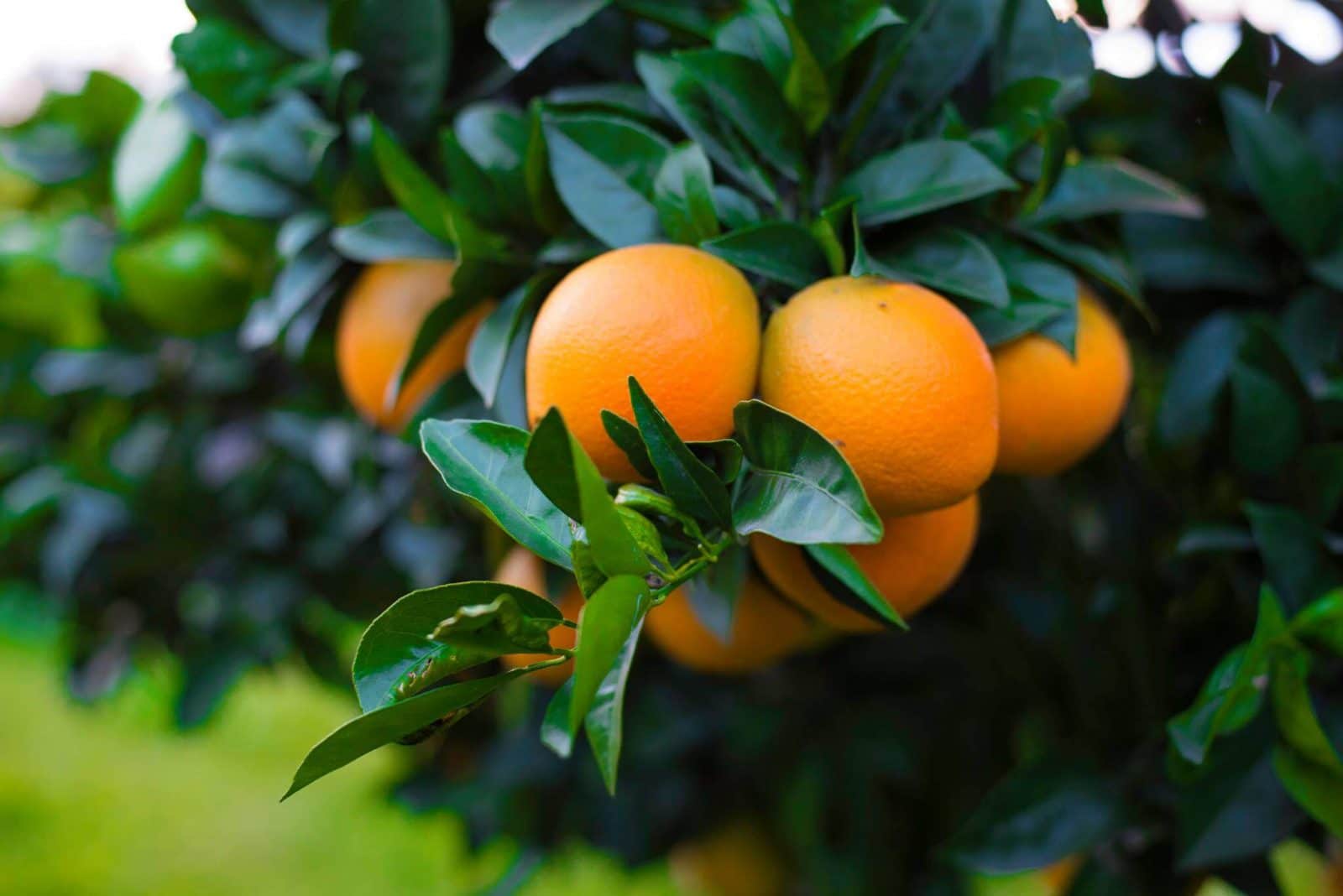
It looks like a defect, a malformation, but instead the variety of Citrus Sinensis or Navelina orange hides another small orange inside, almost as if it were a twin located at the opposite pole from the petiole. Another interesting feature is that it has no seeds inside it and even springs from sterile flowers. Several are its beneficial properties, such as abounding in the content of vitamins A, C, B1, B2, mineral salts and sugars, giving it high antioxidant, detoxifying, diuretic and digestive, antihemorrhagic and blood vessel-protecting qualities.Navel orange is therefore excellent not only against seasonal ailments, flu and bronchitis, but also proves effective in the prevention of rheumatic diseases and pains. Excellent for a super-energetic juice, or for a healthy citrus salad, thanks to its special organoleptic qualities this variety is a sought-after ingredient for aperitifs and appetizers, first and second courses, as well as desserts and sweets.
ORANGE WASHINGTON NAVEL

Washington Navel oranges have a very high size and derive from the spontaneous mutation of the Selecta orange; they have an elongated spherical shape and the ripening period is from late December to March. This fruit has a very pleasant taste, it has blond flesh and no seeds, but the main characteristic is the pleasant and never sour flavor, which makes it really delicious. Unlike the other Sicilian varieties, which are characterized by a more or less sour taste, Washington Navels have a more sugary pulp and a perfect balance between taste and fragrance. The main characteristics mainly affect the pulp: the juice vesicles dissolve in the mouth leaving very little residue. It can be said that the Washington Navel is endowed with an exceptional quality related to environmental factors such as climate, the soil in which it grows, and water, which give this citrus fruit not only an authentic flavor, but also particularly valued organoleptic properties:
-
- Vitamin A: Essential for smooth functioning of the retina and vision, and essential for bone growth. Vitamin A keeps skin, hair, mucous membranes healthy and protects the lungs from various infections.
-
- Vitamin B1: gives support to the body in times of fatigue and stress.
-
- Vitamin B2: It is an excellent anti-inflammatory. It is an outstanding remedy for canker sores, stomatitis, and lip lesions. It relieves heartburn and inflammation.
-
- Vitamin C: It is a powerful antioxidant, protects our body cells from free radical damage and facilitates iron absorption.
ORANGE NEWHALL
 The Newhall orange is a variety of Navel orange that is characterized by the presence of the same navel-shaped depression already introduced with earlier cultivars. The plant is vigorous, with a tendency to branch downward, giving it a collected habit.
The fruit is ovoid, medium to large in size, and the skin is medium thick and dark orange in color, tending to reddish toward the end of ripening. Another key characteristic is that it has excellent flavor and is of very high quality.
Newhall is an orange that can be eaten in its fresh state, processed into juice or used for making jams and liqueurs, while the peels are suitable for making candied fruit. Ripening of this citrus fruit occurs from November to March.
NAVELATE ORANGE

This fruit is derived from the Washington Navel mutation and has excellent flavor; the ripening time is late and harvesting, in fact, can extend into June. Because of its low productivity, it has a more limited distribution than the other varieties.
VARIETIES OF PIGMENTED OR RED ORANGES

Their name derives from the presence of “anthocyanins” that give the fruit these red color pigments, they have a high sugar and acidity content which is why blood oranges have their characteristic flavor. Pigmentation results from temperature ranges and they can have different levels of pigmentation depending on where they are grown. Production of red pigmented oranges is limited almost exclusively in eastern Sicily.
BLOOD ORANGE

Due to the late time of ripening this variety has good fruit quality, the skin is deep orange with red hues as is the flesh and has a high citric acid content.
The Sanguinello is a highly prized variety of Sicilian blood orange. its characteristic skin has a beautiful deep orange color and streaks tending to red; the flesh is amber with red streaks of various gradations, is very juicy, has few seeds and low acidity. It ripens around February, but it is in spring that its organoleptic characteristics reach perfection. This variety of orange is ideal for preparing excellent juices with a deep red color and Its juice is rich in minerals and vitamins. Thanks to its properties, Sanguinello is a valuable ally of health and effectively helps fight free radicals. Its pleasant and distinctive flavor will delight us until late spring.
DARK ORANGE

Oranges of the Moro variety are by far the most pigmented and are cratered by a particular aroma, and their availability is normally concentrated in the months of January, February and March. They present a globular shape and dark red flesh; in fact, they are the variety with the highest pigmentation. They possess excellent organoleptic qualities and ripen in December. Characteristic is the color of the juice, blood red, determined by the high concentration in the pulp and peel of anthocyanins, which play an important antioxidant function that defends the body from phenomena of capillary fragility, cellular aging and the onset of some forms of cancer. Anthocyanins are formed due to the strong temperature fluctuations, common during the winter period in hilly or mountainous areas on the slopes of Etna volcano and The juice concentration is very high. Moro oranges tend to have a pleasant flavor with a small hint of acidity.
TAROT ORANGE

Several ” clones” belong to this variety, such as: tarocco dal muso, tarocco nucellare, tarocco gallo, tarocco scirè, tarocco cocuzza, tarocco meli, characterized by the more or less intense red coloring, of the peel and especially the flesh. Tarocco oranges have a medium to large size with red-striped pulp, good to eat and easy to peel due to the medium thickness of its very faintly colored peel. With an indistinguishable aroma, the tarocco orange is the queen of Sicilian oranges. The most prized and appreciated variety in the world. It belongs to the cultivar of pigmented or sanguine oranges because of its characteristic red color determined by special pigments called “anthocyanins” and because of special environmental factors: the red coloring becomes more intense with low temperatures and temperature ranges. From an organoleptic point of view, they are characterized by a very pleasant flavor due to the high but at the same time balanced content of sugars and acids, as well as the presence of some aromatic substances such as limonene and other organoleptic substances. To this is also added a high juiciness.


