


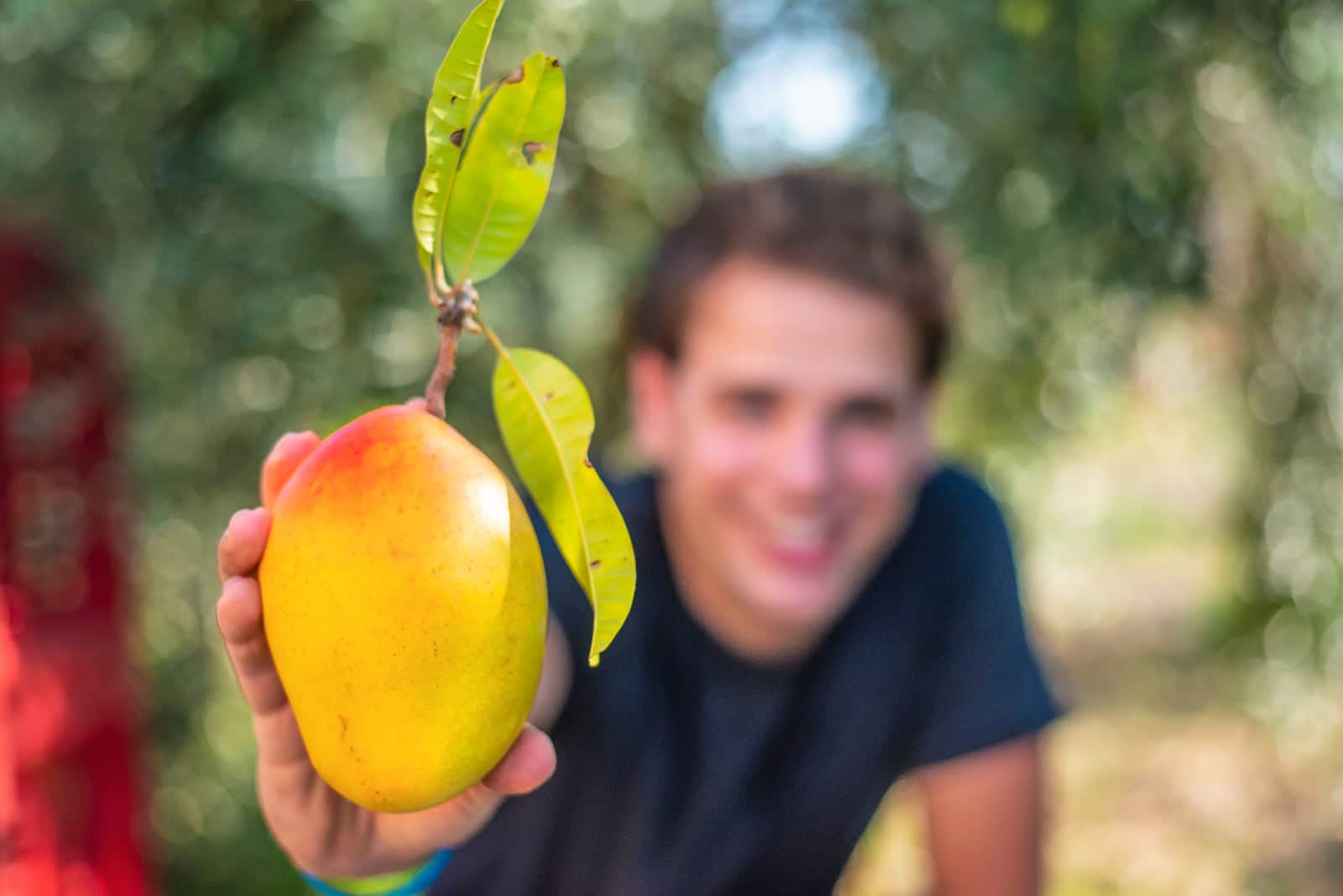
Mango is a tropical fruit grown in different parts of the world, known for its sweet and unmistakable taste. It is characterized by a very sweet taste that recalls hints of peaches and pineapples. India remains the largest producing country in the world, growing significant quantities of mango each year. The skin of the fruit, whose color can vary from dark green to orange, is quite tough and hides a soft, juicy flesh. In Italy, the first experiments started in Sicily, where the climate turned out to be particularly suitable for this exotic fruit; in fact, the harvesting of our 100% Sicilian Mango takes place as early as the first days of September. It is mostly eaten raw, ideal for the preparation of juices, smoothies and centrifuges. Its positive properties endure better when the fruit is left in its natural state, so that more benefits are transmitted to the body. In particular, fresh mango is known to be rich in polyphenols.
Gallic acid, caffeic acid and quercetin are mainly responsible for the mango’s anti-inflammatory and antioxidant properties.
Hidden within it are good amounts of protein, lipids and minerals, as well as an important content of vitamin A and vitamin B. Vitamin A helps to improve the quality of vision, thanks to the presence of carotenoids. Mineral salts such as potassium and sodium, on the other hand, help fight fatigue and overcome times of stress.
Mango varieties
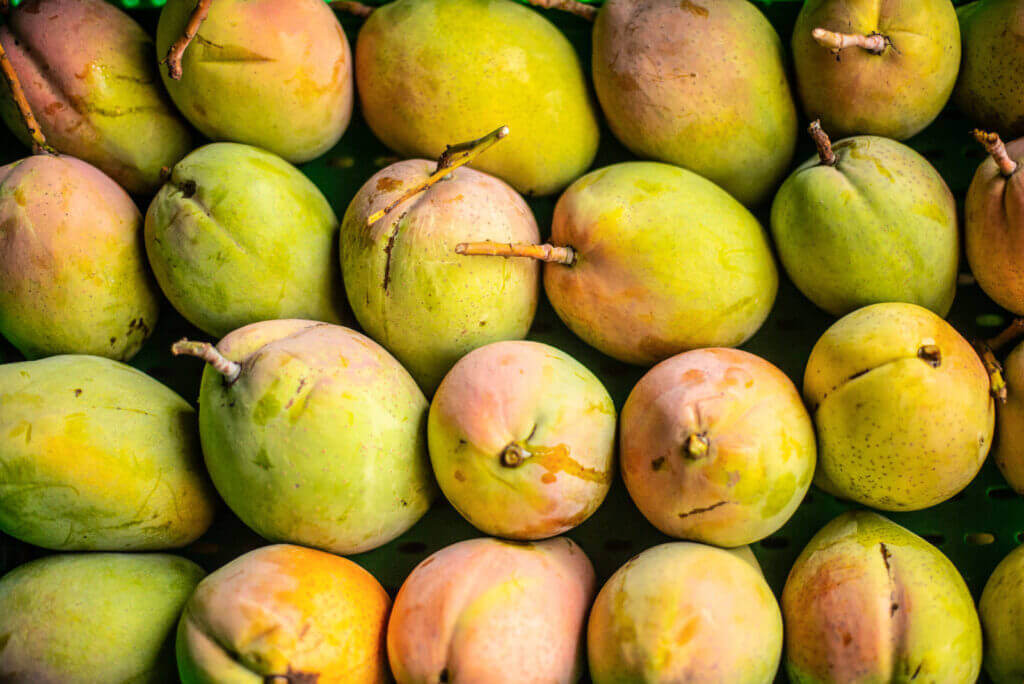
The most common variety of mango, the first to be grown in Sicily, is the Kensignton Pride. Unlike other mango qualities, the Kensignton has fairly early fruiting-between August and September-and withstands low temperatures well. Then mention should be made of the Keitt quality, which, on the other hand, has a late ripening –between October and November – and is characterized by a reddish skin with small white dots.
The Israeli variety is called Maya and can be recognized by the red over-coloring of the skin, which hides a very juicy, intense yellow fruit. Finally, let’s add the Glenn quality, which is slowly replacing Kensignton because of its early ripening (in August) and delicate, balanced flavor.
How many calories does the mango fruit have?
Mangoes are often recommended in low-calorie diets, precisely because of the reduced amount of calories.
If we consider a portion of about 100 g of mango, the number of calories is 53 units. Below, however, we indicate the nutritional values of the mango fruit, again considering the 100 g portion. – 82.80 g water
– 12.60 g carbohydrates
– 12.60 g soluble sugars
– 1 g protein
– 0.20 g fat
– 1.60 g fiber
– 250 mg potassium
– 0.02 mg vitamin B1
– 0.06 mg vitamin A
– 28 mg vitamin C
Recipes and Pairings
The sweet flavor of mango lends itself perfectly to the preparation of fresh, summery recipes. It is not unusual to find it in salads, combined with lime oravocado. Likewise, it is often used to prepare accompanying sauces for fish main courses or refreshing desserts. Mango popsicles, for example, are an uncommon alternative to the classic orange version. Refreshing and nutritious, they are suitable for the whole family.
Mango Popsicles
To prepare about 10 popsicles you will need the following ingredients: 500 g mango, 60 g sugar, the juice of 2 limes and 280 ml almond milk. You will only need to clean and cut the mango, obtaining all the pulp and pouring it inside a kitchen blender. Then add the sugar, milk and lime juice.
Operate on full speed until you obtain a fairly liquid mixture, which will be poured inside the appropriate popsicle molds. The mango popsicles will need to chill in the freezer for at least 6 hours, then you can take them out and enjoy a cool summer snack with a tropical flavor.


