



Sicily is the home of blood oranges, juicy and intensely flavored fruits that accompany the entire winter season. Endowed with twice the vitamin load of regular oranges, citrus fruits in their red version remain among the most sought-after and among the tastiest. In Sicily they are used to prepare appetizers, fresh salads, main courses and, of course, desserts and fruit salads. The blood orange season is rich in fruit and fragrance, filling the island and the vans of those who transport them throughout Italy. Three varieties are the most widely produced and in demand, the Tarocco, Moro and Sanguinello oranges. Each has its own specific characteristics and small variations in taste. Young and old alike appreciate all three varieties, although the “Tarocco” variety is the most successful.
The Red Oranges
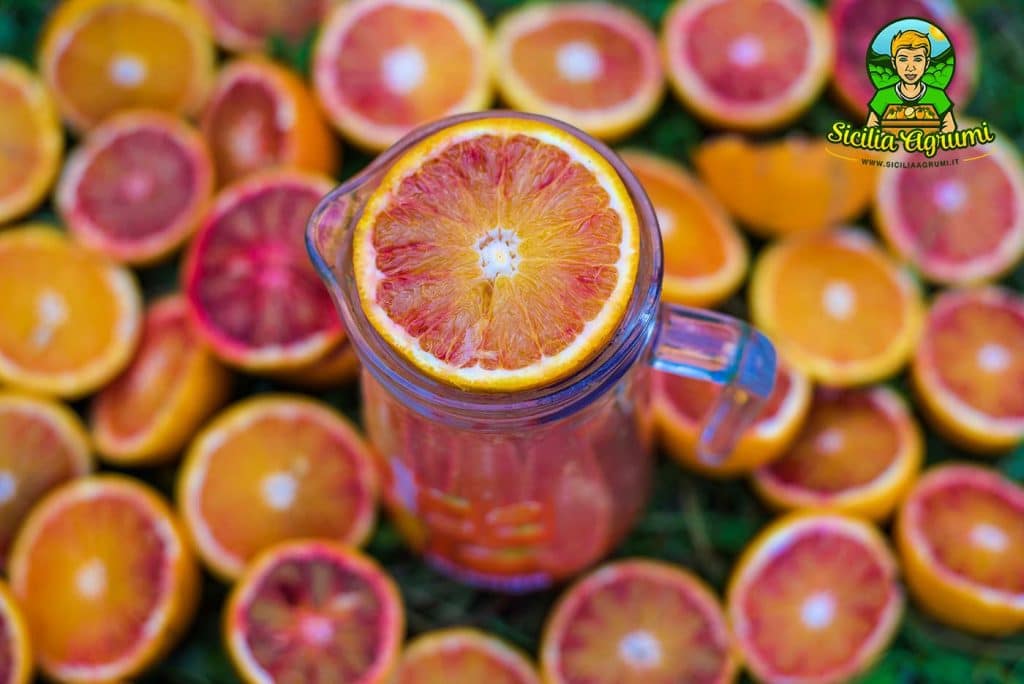
Blood oranges belong to the PGI (Protected Geographical Indication) category. They are grown mainly in the provinces of Catania, Enna and Syracuse, where the climate is favorable to their growth and development. Great attention is paid to cultivation methods, which respect tradition and take care of the fruit from the earliest stages of ripening. At harvest time, oranges have a spherical – or obovate – shape and a dark orange skin. The interior is covered with streaks of red, with completely seedless segments. Their ripening period is from mid-December to late May, with small variations depending on the type of orange. In most cases, we are talking about a winter/spring fruit, which can be eaten until the last oranges appear just before summer.
Benefits Red Oranges
As anticipated, blood orange has a higher concentration of vitamin C than the “orange” version. In particular, the percentage is said to go up by 40 percent, making these fruits a real boon for the body. Its antioxidant properties allow it to safeguard the health of the body and help it fight a whole range of dangerous external agents.
In winter, blood oranges can help prevent the arrival of the annoying seasonal cold by warding off bacteria and protecting the body’s cells. In addition, it seems that blood oranges also manage to speed up the metabolism response, aiding nutrient assimilation and digestion. Many people describe them as a formidable ally to the diet, enabling them to reduce fat deposition. In all cases, the heart fruit of Sicily remains tasty and healthy, a strength of the island that would be virtually impossible to give up.
The advice of nutritionists
Nutritionists’ advice is to drink blood orange juice at least every other day, perhaps eating the fruit directly. The peel is slightly less tough than that of classic oranges, and is easier to remove. The bright taste of blood orange can become a perfect snack, a healthy afternoon snack that is both full of smell and flavor.


